UXO Risks Along the UK River Network
The UK’s rivers and canals carry a wartime legacy that is easy to overlook.
Many inland waterways run through the industrial and urban areas that were heavily bombed during the Second World War. Ordnance that entered the water during bombing, clearance or disposal may still remain in riverbeds, banks and surrounding ground decades later. And it is not only German ordnance that presents a risk. Allied munitions also entered watercourses through training, storage, loss and disposal, creating additional UXO considerations for inland sites today.
For any project involving ground disturbance in or alongside a river or canal, unexploded ordnance (UXO) should always be considered as part of the site’s overall risk profile.
Rivers often ran through the target areas
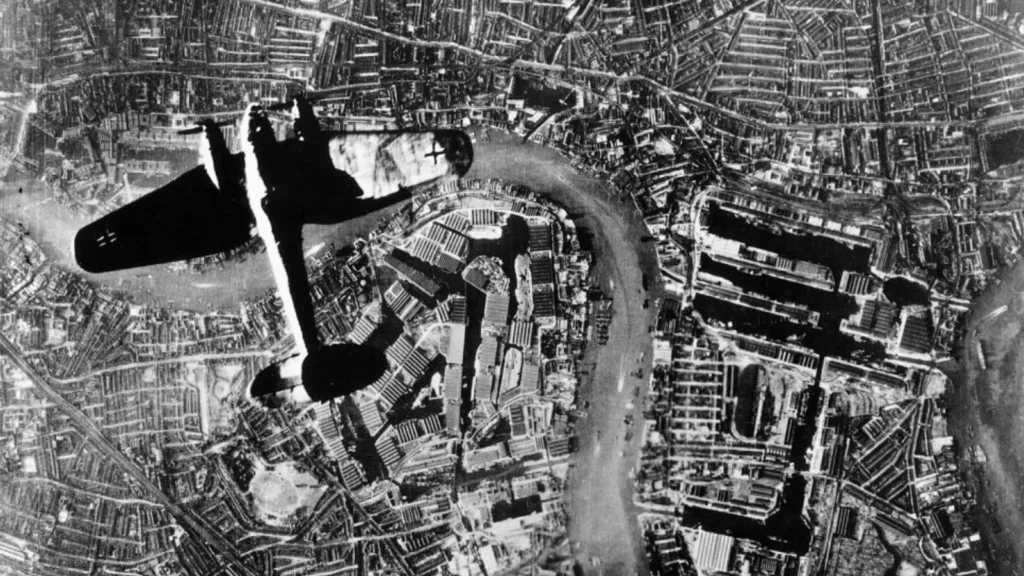
Wartime bombing was often concentrated around ports, factories, railways and the dense urban and industrial districts that developed around waterways.
Rivers could also provide useful navigation features for aircraft. Their course could help crews orient themselves towards ports, docks and industrial targets, particularly where visibility was limited.
As a result, a river running through a former industrial corridor may have been exposed to bombing on its banks, in the surrounding ground or directly within the watercourse.
For today’s projects, that can create a credible UXO risk. Riverside developments, bridge works, flood defence schemes and dredging programmes can all disturb ground that was either directly bombed or subsequently affected by the movement and disposal of ordnance.
Water hides what the records miss
Bombing records are inherently incomplete, and water makes establishing a reliable picture of historical UXO risk even more difficult.
An item entering a river on impact, or being moved into a watercourse during post-war clearance, may leave little or no evidence. Silt, mud and debris can then conceal it for decades until the riverbed or bank is disturbed.
Post-war clearance operations also did not remove every item of unexploded ordnance, particularly where access was difficult or material lay beneath the surface. This means the absence of a recorded UXO find, or even a recorded bomb strike, does not demonstrate that a watercourse is clear.
Where a riverbed or bank has never been properly surveyed, there may simply be limited evidence available to establish what remains below the surface.
Rivers and canals were also disposal routes
Not all UXO found in waterways originated from bombing. Rivers and canals were used as disposal routes during and after both world wars. Ordnance was dumped, lost or cleared into watercourses, sometimes with little consideration for what might happen to it in the future, due to an out of sight, out of mind mentality. As a result, some of this material remains in place today.
Magnet fishing continues to demonstrate the extent of historic ordnance within UK waterways, with discoveries ranging from individual items to groups of munitions that appear to have been disposed of together.
This is why UXO risks on a waterway cannot be assessed through bombing density alone. A site with a relatively modest bombing history can still present a credible risk through historic disposal, ordnance migration or subsequent movement of the riverbed.
What our past work has shown
Brimstone has undertaken plenty of UXO risk assessments for projects where a watercourse forms a significant part of the site or working environment.
At Coronation Road in Bristol, our assessment identified an abandoned unexploded bomb in the eastern section of the site, along with a further item of high-explosive ordnance to the west. The site sits on the northern bank of the River Avon, where Bristol’s port and aeronautical facilities drew heavy bombing, and 100 high-explosive strikes were recorded within 500m. Ground conditions associated with the River Avon meant that UXO removal was considered particularly challenging, and the eastern item was knowingly left in place.
At Mayflower Park in Southampton, a proposed sheet pile installation on the River Test was assessed within a heavily bombed area with a documented wartime disposal history. The site sat close to confirmed Luftwaffe primary targets, and was requisitioned as a D-Day embarkation point, handling significant volumes of ordnance on ground beside the river. Much of the site was mudflats and open water, where a bomb would leave little surface trace. The site was assigned a Moderate UXO risk rating.
These projects highlight an important point: the presence of a river does not automatically mean a high UXO risk, but it can introduce additional pathways that need to be considered alongside the site’s bombing and historical land-use records.
Assessing UXO risks on rivers and canals
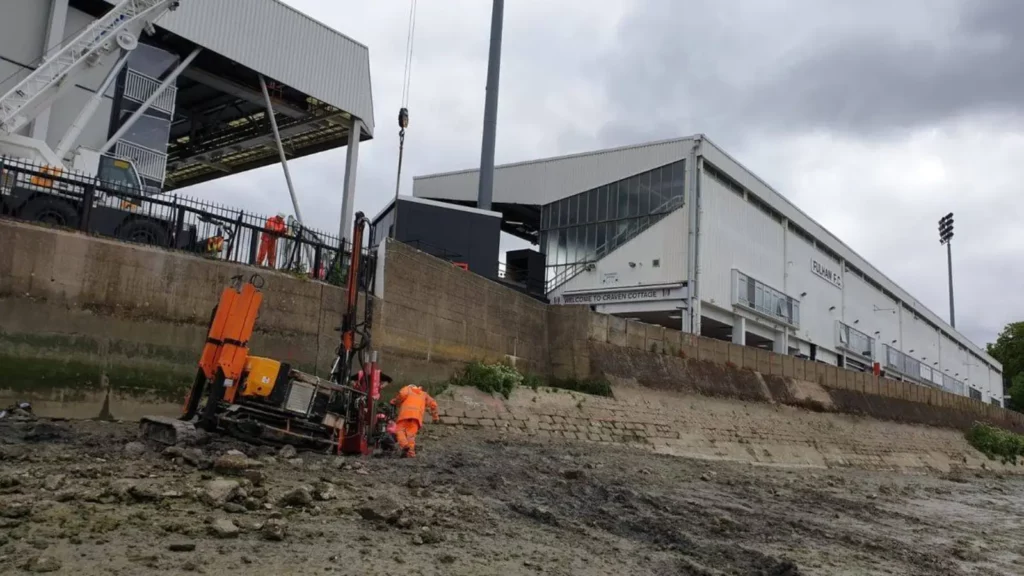
A UXO risk assessment establishes whether a credible risk exists and, where appropriate, recommends proportionate mitigation. Depending on the findings, this can include measures such as UXO watching briefs, specialist surveys and on-site Explosive Ordnance Disposal (EOD) support.
The fundamental assessment process is the same as for any other site. However, watercourses introduce additional practical considerations. Access can be restricted. Riverbanks and beds can be difficult to survey. Ground conditions may be unpredictable, and conventional investigation techniques may not always be suitable.
Planning for these constraints early can make a significant difference. Identifying UXO requirements before works begin allows appropriate mitigation, access arrangements and specialist support to be incorporated into the project methodology, rather than having to react to an unexpected discovery on site.
Planning works on or alongside a UK river or canal?
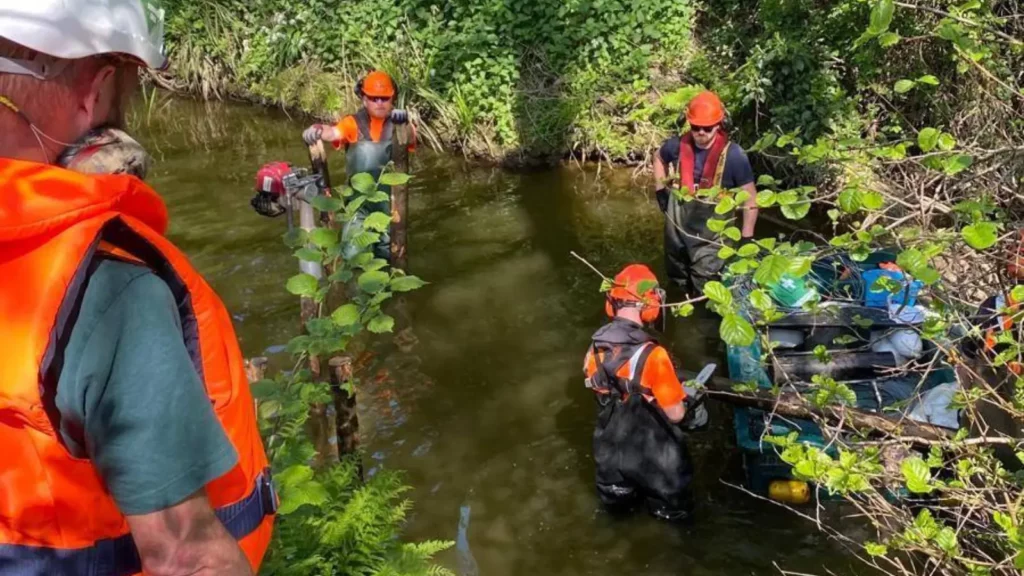
Brimstone provides UXO risk assessments and UXO mitigation services for riverside, canal-side and watercourse projects across the UK.
To discuss your project, contact us on 020 7117 2492 or enquire@brimstoneuxo.com.
For regular updates, project insights and industry guidance, follow Brimstone UXO on LinkedIn, Facebook, Instagram, and YouTube.
"*" indicates required fields