How UXO Planning Supports Safe Construction
Unexploded ordnance (UXO) remains a credible risk on construction and development sites across the UK.
More than 80 years after the Second World War, the legacy of aerial bombing, military training, defence activity and historic munitions storage remains beneath the ground. A site can look completely clear at the surface while still containing items capable of detonating when disturbed by excavation, piling, drilling or other ground works.
For construction teams, the answer is not to assume a site is safe. It is to understand the risk before work starts and plan accordingly.
Integrating UXO risk management into the project programme gives teams the information they need to make informed decisions, put proportionate controls in place and avoid unexpected disruption. Done properly, UXO planning protects people, supports compliance and keeps construction moving.
The risk is site-specific, not general
UXO risks can vary significantly from one site to the next.
A development near a former airfield, dockyard, military installation or industrial area may have a very different risk profile from an open agricultural site. Even neighbouring plots can have different histories and therefore different levels of potential contamination. That is why UXO risks should always be assessed rather than assumed.
A UXO desk study examines available historical evidence, including wartime bombing records, military land use, historical mapping and aerial photography. This information helps establish whether a site has a credible UXO risk and, importantly, where that risk is likely to be concentrated.
The aim, however, is not simply to establish whether UXO might be present. It is to build an evidence-based picture of the site so that any further investigation and mitigation can be targeted where it is actually needed.
CIRIA C681, the recognised industry guidance for managing UXO risk in the UK construction sector, sets out a four-stage approach. A Preliminary Risk Assessment establishes whether UXO represents a credible risk. Where it does, a Detailed Risk Assessment can further quantify that risk, informing the appropriate mitigation and its implementation on site.
Each stage builds on the last. That means the level of investigation and mitigation can remain proportionate to the risk, rather than every site being treated in the same way.

Planning aligns risk with the works
Understanding the risk is only the first step. The next is understanding how that risk interacts with the construction programme.
Different ground operations create different levels of exposure. Shallow-buried small arms ammunition and other low-lying ordnance can be encountered during site clearance, stripping and shallow excavation. Piling, drilling and borehole investigations can reach items at greater depth.
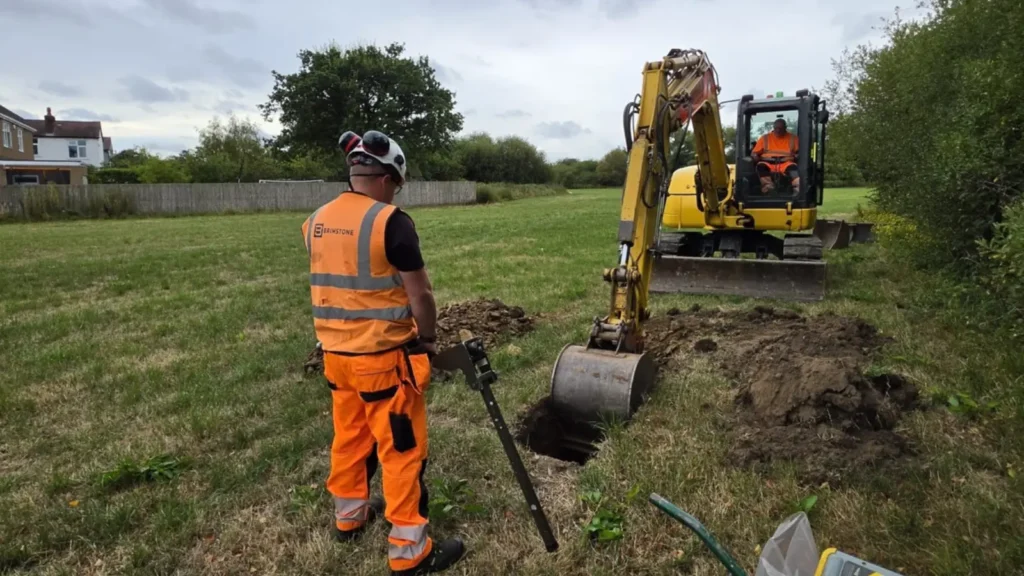
The type of ground, proposed methodology, depth of penetration and nature of the potential ordnance all influence the appropriate mitigation. There is no single survey or mitigation measure that is suitable for every site. Effective UXO planning means selecting the right approach for the conditions and the works being undertaken. That might involve non-intrusive or intrusive surveys, or on-site support such as a watching brief or borehole support.
The principle is straightforward: identify the risk, understand the works, and match the mitigation to both.
This is also where the ALARP principle (reducing risk to a level that is as low as reasonably practicable) becomes important. Proportionate risk management does not mean applying every possible control to every site. It means taking reasonable steps to reduce the identified risk based on the evidence available.
Early integration protects the programme
UXO planning delivers the greatest value when it forms part of pre-construction planning rather than being treated as an issue to deal with once machinery is already on the site.
Commissioning a risk assessment during the design and planning stages gives the project team time to understand what, if anything, needs to happen before intrusive works begin. Any survey, clearance or on-site support can then be incorporated into the programme alongside other enabling works.
That matters because an unexpected UXO discovery during construction can stop work immediately. If an item is identified, ground works must cease while the situation is assessed and an appropriate response is established. Depending on the item and the circumstances, this can result in evacuations, restricted access, specialist investigation and potentially clearance or disposal operations.
The impact can extend far beyond the area where the item was found, with plant standing idle, subcontractors unable to continue and subsequent activities pushed back.
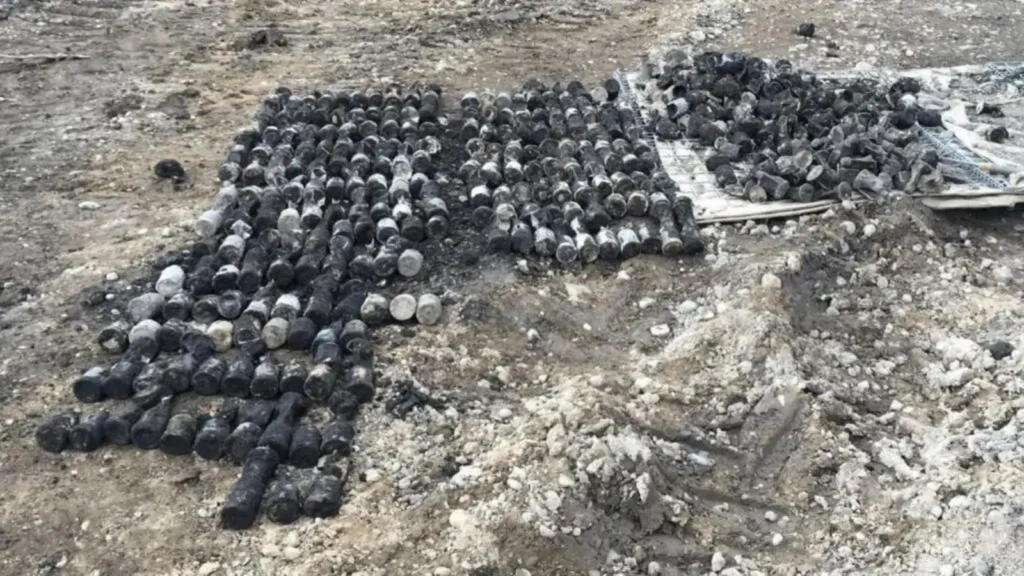
Brimstone has seen the consequences first-hand. On one housing development, extensive contamination resulted in the site being shut down by the Health and Safety Executive for 12 months. During that period, Brimstone recovered and destroyed more than 3,500 items of UXO before the site could be handed back.
That is an extreme example, but it demonstrates why UXO should be considered a construction planning issue rather than simply an emergency response issue. The earlier the risk is understood, the more control the project team has over the outcome.
Controlling costs
The financial impact of UXO follows the same pattern as the programme impact: planned mitigation is generally easier to manage than an unexpected incident.
A Preliminary Risk Assessment is a low-cost, desk-based process that can provide an early indication of whether UXO presents a credible risk. In some cases, the available evidence may allow the risk to be discounted without the need for further intervention.
Where a credible risk is identified, additional assessment, surveys and on-site support can be scoped, priced and programmed in advance.
An unexpected discovery is different. Emergency EOD support, specialist equipment, site evacuations, investigation, disposal and extended programme durations can all create costs that were not included in the original construction plan. There can also be indirect costs associated with plant and labour standing idle, delayed subcontractors and disruption to the wider programme.
Early UXO planning turns an uncertain liability into a known project consideration. It gives the project team the opportunity to understand the potential cost, programme the necessary controls and make decisions before work starts, rather than making them under pressure after a find.
Protecting people on site
Above everything else, UXO risk management is about protecting people. If disturbed, unexploded ordnance can detonate, with the potential to cause serious injury or death and significant damage to plant, buildings and surrounding infrastructure.
Time does not make UXO safe. Historic ordnance can remain hazardous for decades, and corrosion, degradation and changes to the surrounding ground conditions can introduce additional uncertainty.
For construction workers, the danger can arise from routine operations. A piling rig, excavator, drill or other item of heavy plant can interact with buried ordnance without the operator knowing it is there.
Recent incidents across Europe have demonstrated the consequences of disturbing buried wartime ordnance during construction and drilling. Closer to home, a worker near our Stratford office suffered serious burns after a digger struck buried ordnance. These incidents reinforce a simple point: UXO is not a historical problem. It is a present-day construction risk.
Informed teams respond correctly
UXO awareness should extend across the project team, from senior planners and principal contractors through to subcontractors, machine operators and groundworkers. Anyone who could encounter buried ordnance needs to know what a potential item may look like and, crucially, what to do if one is found. That is where UXO awareness training and toolbox talks have an important role.
The objective is not to turn construction workers into UXO specialists. It is to give them enough information to recognise a potential hazard, stop the relevant works and follow the agreed reporting and response procedure.
A clear, rehearsed response reduces the likelihood of confusion when an unexpected item is encountered.
Managing legal duties and protecting reputation
UXO can also form part of a project’s wider health and safety responsibilities. There is no UK legislation that specifically requires every construction site to undertake UXO risk mitigation before breaking ground. However, employers and duty holders have responsibilities under the Health and Safety at Work Act and the Construction (Design and Management) Regulations to identify and manage foreseeable risks.
Where credible UXO risk exists, it should therefore form part of the project’s overall approach to managing health and safety. A documented assessment and mitigation strategy provides an audit trail showing that the hazard has been considered and, where necessary, controlled. This can support the responsibilities of clients, principal designers and contractors and provide useful evidence for other project stakeholders, including insurers.
There is a reputational consideration too. A UXO discovery does not automatically represent a failure in project management, but where a known or foreseeable risk has not been considered, the consequences can extend beyond cost and programme disruption.
Conversely, being able to demonstrate that the risk was identified, assessed and managed from the outset sends a clear message to clients, investors, partners and project teams: safety was planned for, not left to chance.
The Brimstone approach
At Brimstone, we believe effective UXO risk management starts with understanding the site and ends with giving the people working on it confidence.
We support projects across the full UXO risk management lifecycle, from Preliminary and Detailed Risk Assessments through to survey, on-site support, recovery and disposal.
Our approach is evidence-led and proportionate, with recommendations aligned to the risks identified and the works planned.
That means project teams get more than a report. They get a clear understanding of the potential risk, practical mitigation that reflects the construction methodology, and support that can be integrated into the programme.
Plan for UXO before the works begin
UXO may have been buried for decades, but that does not make it any less relevant to today’s construction projects. The most effective way to manage the risk is to understand it early, plan the appropriate controls and make sure everyone involved knows how to respond.
If you’re planning a construction or development project and want to understand whether UXO could affect your site, Brimstone can help. Get in touch to discuss your project and plan your UXO risk management before ground works begin.
For regular updates, project insights and industry guidance, follow Brimstone UXO on LinkedIn, Facebook, Instagram, and YouTube.
"*" indicates required fields