UXO Toolbox Talks | Why They Matter for Site Teams
UXO risk management is about reducing risk to as low as reasonably practicable (ALARP). Where a credible UXO risk has been identified, appropriate mitigation should be put in place to protect people and support safe working.
But UXO awareness is not only relevant to higher-risk sites. Even where a site has been assessed as low or low-moderate risk, clients may still want their teams to understand what they could encounter and how to respond if something unexpected is uncovered.
That is where UXO toolbox talks have a key role.
Delivered before relevant works begin, a toolbox talk gives site teams a straightforward introduction to the general risks associated with UXO, how to recognise a suspect item and what to do if one is encountered. It is not about creating concern or turning construction workers into UXO specialists. It is about giving people the knowledge and confidence to respond correctly, just in case they need to.
Brimstone provides UXO safety awareness briefings as part of its on-site services and as a stand-alone option, giving clients a simple, proportionate way to add another layer of awareness to their site safety arrangements.
Turning awareness into action
Knowing there may be UXO on a site is one thing. Making sure everyone working there knows how to respond is another.
Construction sites are busy, changing environments, with multiple contractors, subcontractors and specialist teams working alongside one another. Information can easily get lost as it passes between project teams and the people carrying out the work.
A toolbox talk puts the right information directly in front of the people who need it.
Risk on paper and risk in the ground aren’t the same conversation. A report can establish the potential risk, but the person operating the excavator is dealing with what is actually in front of them. A toolbox talk closes that gap by giving the workforce practical information they can use in the moment.
It gives site teams a clear understanding of the general UXO risk, what they could potentially encounter and the steps they should take if something unexpected is uncovered. It also provides an opportunity to answer questions and make sure everyone understands their responsibilities before work begins.
The aim is straightforward: give people the knowledge and confidence to recognise a potential UXO item, stop work and report it safely.
What is a UXO toolbox talk?
A UXO toolbox talk is a short, practical safety awareness briefing delivered on site, before relevant works begin. It gives the workforce a clear understanding of the general risks associated with unexploded ordnance, how to recognise a suspect item and, most importantly, what to do if one is encountered.
The content should be practical and relevant to the people receiving it. Depending on the project, a briefing can cover:
- The general risks associated with UXO.
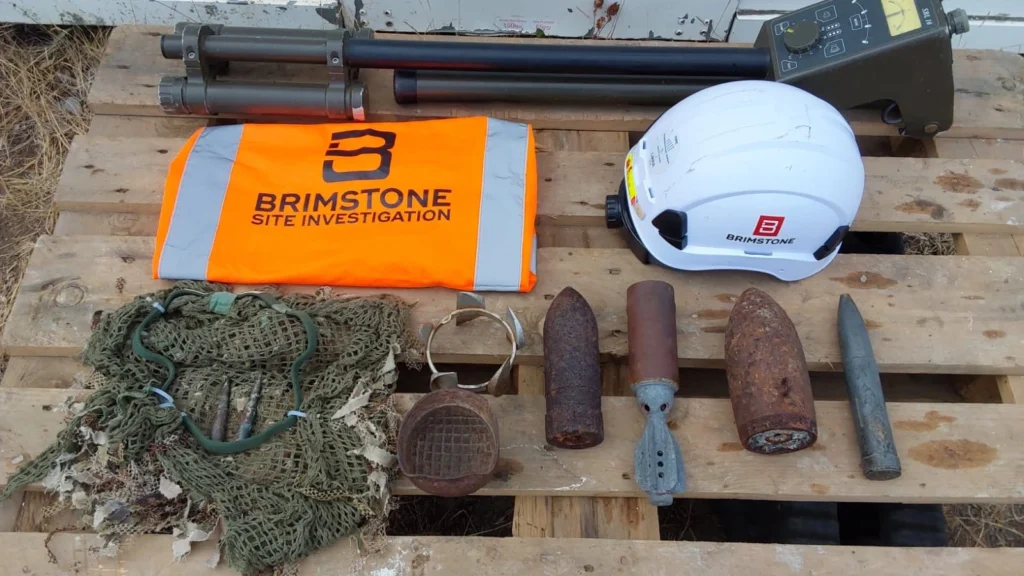
- The types of ordnance that could potentially be encountered.
- Basic identification of suspect items.
- Construction activities that could disturb buried ordnance.
- Areas where the risk may be greater.
- What to do if a suspect item is discovered.
- What not to do.
- Who to notify and how to report a find.
- The site’s stop-work and exclusion procedures.
The aim is not to make construction workers UXO experts. It is to give them enough awareness to recognise a potential item, stop work and follow the correct procedure.
Toolbox talks can also be valuable where a detailed assessment has identified a low or low-moderate risk. Even where the likelihood of encountering UXO is considered limited, giving the workforce a basic understanding of what to look for and how to respond is a sensible, proportionate safety measure.
Why site-specific awareness matters
UXO does not present the same risk on every site. The history of the land, the depth at which ordnance may be present, the types of munitions potentially encountered and the planned construction activities can all influence the potential risk.
A site team working near a former airfield may therefore need different information from a team working on a former industrial site, dockyard or military training area.
The same applies to the work itself.
Excavation, piling, drilling, trenching and other intrusive activities can interact with buried ordnance in different ways. Giving workers some context around the site and the activities they are undertaking helps them understand why particular precautions are in place, rather than simply being told to follow a generic procedure.
UXO risk can be mitigated, but it cannot always be eliminated entirely. The objective is to reduce risk to as low as reasonably practicable, with the level of mitigation reflecting the risk identified and the work being undertaken.
For some projects, a toolbox talk is one part of a wider UXO mitigation strategy. For others, particularly sites assessed as low or low-moderate risk, it can provide a proportionate additional layer of awareness for the workforce.
For projects that require more than a standard safety briefing, Brimstone also provides site-specific training packages. These extended sessions typically last around two hours and can cover explosive munitions principles, sources of contamination, basic UXO identification, safety measures and relevant historical information about the site, drawing on primary and secondary research.
The level of awareness should reflect the project. The important thing is that the people carrying out the work have the information they need to work safely.
Being prepared if something is found
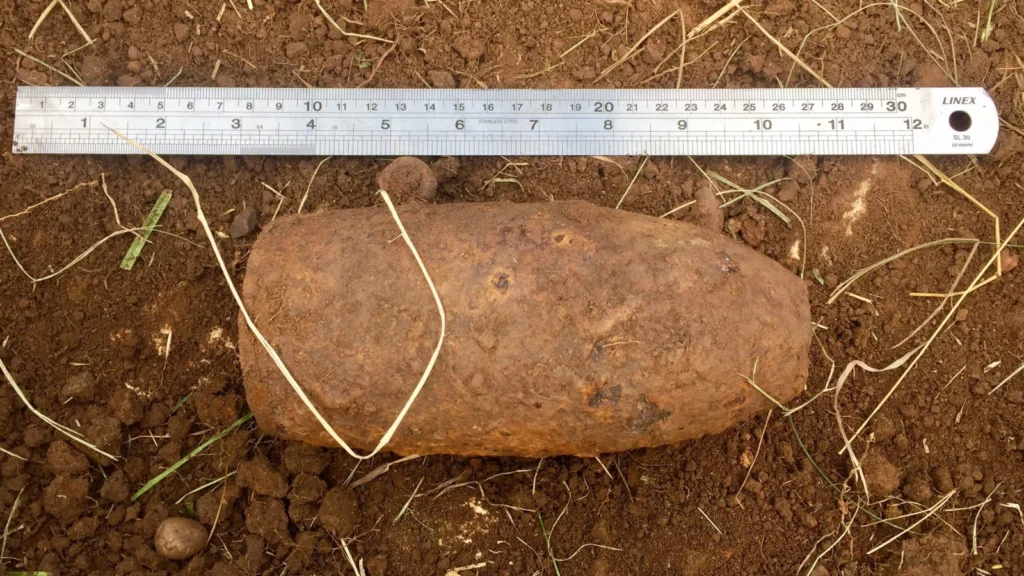
One of the most useful things a UXO toolbox talk can provide is basic recognition.
Construction sites contain thousands of objects that may look unfamiliar, particularly once they have been buried, corroded or damaged over many decades. Site teams do not need to identify ordnance themselves, but they should understand when an object is unusual enough to stop work and report it.
Potential UXO should be treated as potentially hazardous until it has been assessed by a suitably qualified person.
The message to site teams is straightforward:
If you find something unexpected, stop and report it. Do not touch it, move it or investigate it yourself.
Site personnel should understand the agreed procedure before they start intrusive works. This will normally include stopping the relevant activity, moving people away from the immediate area where appropriate, notifying the designated site contact and keeping others away until the item has been assessed.
The exact response will depend on the site, the circumstances of the discovery and the project’s agreed procedures. What matters is that the workforce knows those procedures in advance. An unexpected discovery is not the time to work out who should be called or whether someone should take a closer look.
A clear, rehearsed response gives site management and UXO specialists the opportunity to assess the situation safely and determine the appropriate next step.
Good safety communication should not create alarm. It should create informed behaviour.
Keeping awareness current
Construction sites are rarely static. New subcontractors arrive. Teams change. Groundwork moves from one area of the site to another. Different plant and methodologies are introduced as the project progresses.
That makes ongoing communication important.
A UXO briefing delivered at the start of a project can quickly become less effective if the workforce changes significantly afterwards. Including UXO awareness within site inductions and toolbox talk programmes helps ensure new personnel receive the information they need before starting relevant works.
Refresher briefings can also be valuable when the construction methodology changes or works move into an area with a different risk profile.
UXO awareness should follow the work, not simply sit in a project folder.
The Brimstone approach
At Brimstone, we see UXO awareness as a practical part of safe working on site.
We provide UXO safety awareness briefings as part of our on-site services or as a stand-alone option. Our toolbox talks focus on the practical information site teams need: the general risks associated with UXO, how to identify a suspect item and what to do if one is encountered.
For projects where a more detailed briefing is appropriate, our site-specific training packages provide a deeper look at the site’s history, potential sources of contamination, explosive munitions principles, basic UXO identification and relevant safety measures.
The level of training can therefore be matched to the project and the people carrying out the work.
For us, toolbox talks are not about creating alarm. They are about being prepared. Even where the assessed risk is low, giving site teams the knowledge to recognise a suspect item and respond correctly can provide a simple, proportionate additional safeguard.
Plan the response before you need it
A UXO toolbox talk may only take a short amount of time, but that time can make a significant difference if an unexpected item is encountered. When everyone knows what to look for, what not to touch and who to notify, the site is better prepared to respond safely and decisively.
Good UXO management starts with planning. It continues with awareness.
Whether you need a stand-alone UXO toolbox talk or wider support with UXO risk management, Brimstone can help put the right information and controls in place for your project.
Get in touch to discuss UXO awareness and toolbox talks for your project.
For regular updates, project insights and industry guidance, follow Brimstone UXO on LinkedIn, Facebook, Instagram, and YouTube.
"*" indicates required fields