Past Warfare, Chemical Agents and a Secret Research Facility
A recent BBC documentary has offered viewers a rare glimpse inside Porton Down, the UK’s highly secretive defence research facility. Operated by the Defence Science and Technology Laboratory (DSTL), the site specialises in developing technologies to combat chemical and biological threats. The programme revealed how the UK manages these dangerous agents and highlighted Porton Down’s crucial role in disposing of chemical munitions, many of which still lurk beneath British soil and along its coastlines.
Even today, some UK beaches remain contaminated with chemical residues from past military testing and training exercises. With Porton Down as the only facility in the country equipped to safely dispose of such hazardous items, its work is vital in protecting public health and ensuring national security.
The rise of chemical warfare
While chemical weapons may seem like a product of modern conflict, the concept of toxic weaponry dates back thousands of years. Ancient armies used poison-tipped arrows and smoke-based tactics to gain the upper hand in battle. However, the industrial-scale use of chemical agents began during World War I, forever changing the face of warfare.
In 1915, mustard gas was introduced on the Western Front, inflicting horrific injuries on soldiers. The gas caused severe chemical burns, respiratory damage, and blindness. The widespread devastation it caused led to the Geneva Protocol of 1925, which banned the use of chemical and biological weapons. However, the agreement did not prohibit their development, production, or stockpiling – leaving a loophole that several nations, including the UK, exploited.
During World War II, Britain stockpiled mustard gas in preparation for a potential German invasion. Although the gas was never deployed in combat, it was extensively tested. This included the Rawalpindi experiments, where thousands of British and Indian soldiers were exposed to mustard gas to determine its effects and improve protective measures. Many participants suffered severe chemical burns, leaving a dark legacy of human experimentation.
Porton Down: Britain’s secretive chemical research base
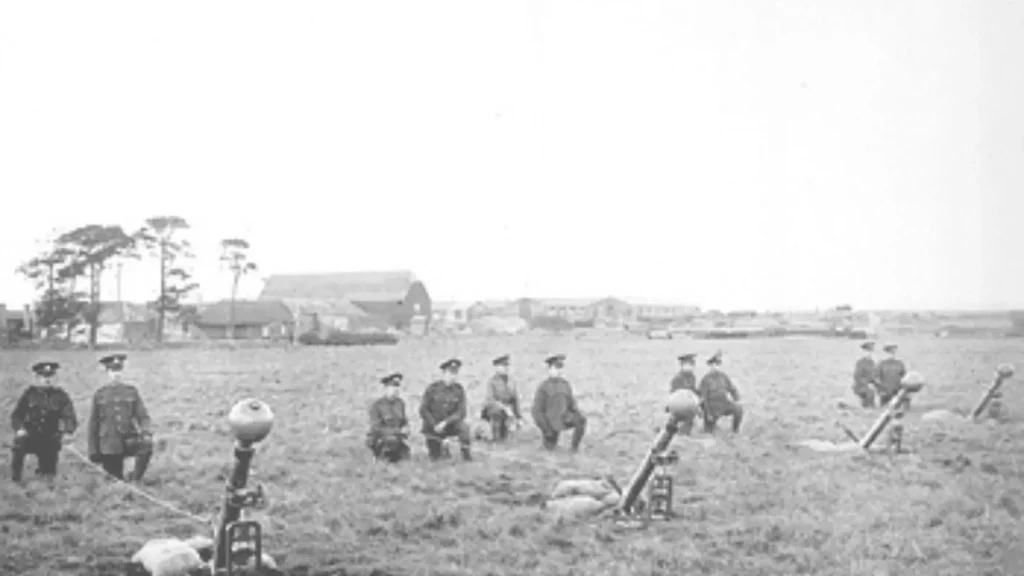
Founded in 1916, Porton Down became the epicentre of Britain’s chemical and biological weapons research. Located in Wiltshire, the facility was initially established to study chemical warfare during World War I. Over the decades, it evolved into a hub for defence science, conducting experiments on chemical agents, nerve toxins, and countermeasures.
Porton Down produces small quantities of chemical agents under strictly controlled conditions. These substances are used to develop protective equipment, such as gas masks and hazmat suits, as well as treatments and antidotes. The facility also plays a vital role in responding to chemical incidents, including the 2018 Salisbury poisoning, where Russian agents used the deadly nerve agent Novichok in an attack on former spy Sergei Skripal and his daughter Yulia.
Despite its vital contributions to national security, Porton Down’s history is not without controversy. From 1916 onwards, over 200,000 volunteers, many of them British servicemen, participated in chemical trials. In 1953, Ronald Maddison, a 20-year-old Royal Air Force engineer, died after being exposed to sarin nerve gas during an experiment. His death remains the only officially recorded fatality from human trials at the facility. However, many former servicemen have since claimed they suffered from chronic illnesses linked to their participation, though these claims have not been officially substantiated.
Chemical Agents still pose a threat today
Although large-scale chemical warfare is largely a thing of the past, the remnants of old conflicts continue to pose risks. Unexploded chemical munitions are still being unearthed across the UK, sometimes in unexpected places.
In 2011, a Welsh beach in North Gower was closed after two soldiers detonated an old unexploded shell buried in the sand. Immediately after the detonation, both soldiers displayed symptoms of mustard gas exposure, including skin irritation and respiratory issues. They were hospitalised, and the area was sealed off. Over 200 samples were taken from the beach, and after extensive testing, DSTL declared the site safe.
Porton Down remains the only facility in the UK equipped to receive, store, and safely dispose of chemical weapons. Its scientists continuously refine disposal methods, contributing to global efforts to eliminate chemical munitions. Through international conferences and collaboration with defence agencies worldwide, DSTL shares its expertise to help other nations strengthen their chemical defence capabilities.
Brimstone UXO: protecting your land from hidden threats
While chemical agents represent a serious hazard, unexploded ordnance (UXO) from past conflicts also poses a major risk to public safety. At Brimstone UXO, we specialise in identifying, surveying, and safely disposing of UXO. Our experienced team provides comprehensive risk mitigation services, ensuring that land is made safe for construction, infrastructure projects, and public use.
If you need a professional UXO risk assessment or disposal service, visit our website or contact us at 020 7117 2492.
Stay informed by following Brimstone UXO on Facebook, Instagram, Twitter, LinkedIn and YouTube for the latest industry insights, safety tips, and company updates.
"*" indicates required fields