UXO Risks and Solar Farms | What Developers Need to Know
As the UK accelerates its shift toward renewable energy, solar farms are becoming a familiar feature of the landscape. These developments are essential to achieving net zero goals, but many are being built on land with hidden, and often overlooked, wartime legacies.
One such legacy is the risk of unexploded ordnance (UXO). During WWII and in the decades that followed, rural areas were frequently used for military purposes, from bombing decoy sites to training areas. Today, these same greenfield and agricultural sites are being used for solar projects, yet they may still contain buried ordnance just beneath the surface.
Brimstone UXO has supported numerous renewable energy developments across the UK and has found that shallow-buried UXO risks are more common on solar farm sites than many developers expect. If left unchecked, UXO can delay construction, increase costs, and pose serious safety risks.
Here’s what solar developers need to know to manage UXO risks effectively before breaking ground.
Why UXO Risk Applies to Solar Farm Developments
Many solar farms are built on greenfield or agricultural land, locations often assumed to be low risk due to their distance from urban centres or industrial targets. But history tells a more complex story.
In reality, these sites often have hidden pasts:
- Military training and testing – Rural land was frequently used for munitions testing and storage, military training and other defensive measures in both world wars and beyond.
- Wartime bombing – Contrary to popular belief, the German Luftwaffe dropped bombs across much of the UK, and not just on urban areas. This included targeting decoy sites, coastal regions and military bases, which were often on or near greenfield land.
- Post-war munitions disposal – Isolated areas were sometimes used to bury or burn surplus ordnance after WWII, with minimal records kept.
- Repurposing of farmland – Much of the land now leased for solar development has been in agricultural use for decades. However, just because land has been used for farming, it doesn’t mean UXO risks are automatically mitigated.
With solar farms often requiring large, relatively undisturbed plots, they are commonly situated on land that hasn’t been significantly redeveloped in over 80 years. This increases the likelihood that any remaining UXO could still be present beneath the surface.
Land Leasing and Agricultural Sites
The shift towards solar energy has encouraged many landowners to lease unused or low-yield farmland to developers. This approach is cost-effective and often viewed as low impact, but it also comes with an overlooked risk: these sites are rarely subject to the same levels of historical investigation as urban developments.
Agricultural land has often escaped prior redevelopment, meaning any wartime contamination is more likely to remain undetected. Brimstone has found that even seemingly quiet farmland can carry a shallow UXO risk from military training or defence activities.

Real-World Experience: Cleve Hill Solar Farm, Faversham
One of the UK’s most significant solar projects, Cleve Hill Solar Farm in Faversham, Kent, highlights the need for robust UXO risk mitigation. Brimstone UXO was commissioned to conduct a UXO drone survey across 316 hectares of land designated for the solar park.
There were a range of factors that meant our UAV was the most suitable methodology for this site, including the size, layout, high water table and active agricultural use. Our team was able to conduct the survey in just 25 days using our drone, compared to what would have taken 150 days had we used the traditional push cart system.
Throughout the survey, our data identified 1,606 targets that could have been items of UXO and required further investigation. Our follow up target investigation of these anomalies resulted in several 30mm projectiles being located at a depth of 1.4 metres. All discovered items were safely removed from site, and our client was issued an ALARP (As Low As Reasonably Practicable) certificate, allowing them to proceed with the solar park development.

Why Non-Intrusive UXO Surveys Are Well-Suited to Solar Projects
In many cases, non-intrusive surveys are the most appropriate approach for solar farm developments. That’s because solar projects typically involve minimal ground disturbance. The construction phase often includes only shallow groundwork for posts, cabling, or minor trenching, meaning deep intrusive UXO risk mitigation may not be necessary.
Non-intrusive methods, such as magnetometer surveys conducted by drone, allow for effective UXO detection without the need to disturb the ground. This is particularly valuable when working on leased farmland or ecologically sensitive areas where minimising disruption is important.
At Brimstone, we regularly use drone-based surveys for solar developments, not just because they’re efficient, but because they’re the most suitable solution for this type of site layout and activity. While every site is different — and deeper investigations may still be needed in some cases — non-intrusive surveys are often the logical and proportionate choice for solar.
Managing UXO Risk: What Developers Should Do
If you’re planning a solar farm project, UXO risks should be considered early in the planning process, and ahead of any ground intrusion works starting. We also recommend clients follow the CIRIA C681 industry guidance, which takes the following, structured approach:
- Preliminary UXO Risk Assessment: A desk-based review of your sites past to identify any military history, and identify if further, more in-depth research is required.
- Detailed UXO Risk Assessment: If a credible risk is found, this stage provides a deeper analysis, helping developers and contractors understand what UXO risks are on their site and how their proposed works could encounter these. The findings of the risk assessment will include a risk rating and recommendations for any mitigation work that is required.
- Mitigation: If a moderate or high UXO risk is identified on your site, you will need to implement mitigation measures. We work with you to find the best solution to the problem, which could be a UXO survey, on-site support and UXO safety awareness briefings.
- Implementation: With a risk mitigation plan in place, the final stage is implementation. This is where UXO engineers deploy to your site to conduct the necessary risk mitigation work. Once the risk has been mitigated, you’ll be provided with an ALARP certificate, enabling you to continue with your proposed works.
While UXO mitigation isn’t legally mandated in the UK, developers still have a duty of care under health and safety laws. Ignoring these obligations can lead to serious consequences, including project delays, legal liability, or harm to personnel.
Being proactive about UXO risk isn’t just best practice – it’s part of responsible site management.
Drone Surveys: A Modern Solution for Large, Rural Sites
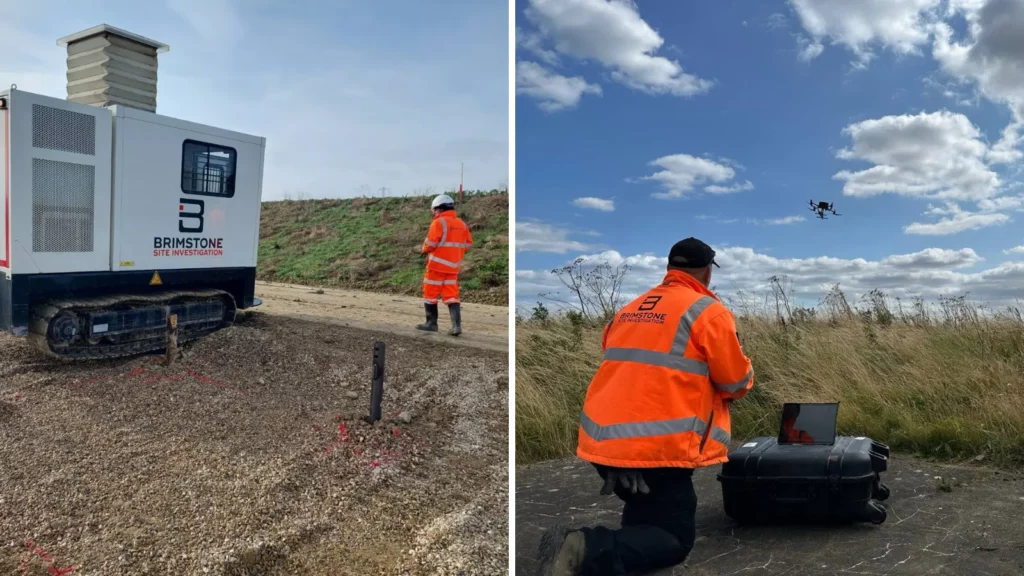
As outlined above, drone-based UXO surveys are often the best-fit solution for solar farm developments, thanks to their speed, precision, and low-impact nature. But they’re not just practical – they also deliver results.
Brimstone UXO was the first company to bring UXO UAV surveys to market in the UK, and we continue to develop this technology to ensure it meets the demands of complex, large-scale sites. From faster coverage of extensive greenfield areas to safe surveying in difficult terrain, our drone surveys provide developers with confidence from day one.
Supporting Renewable Energy with Smarter UXO Risk Management
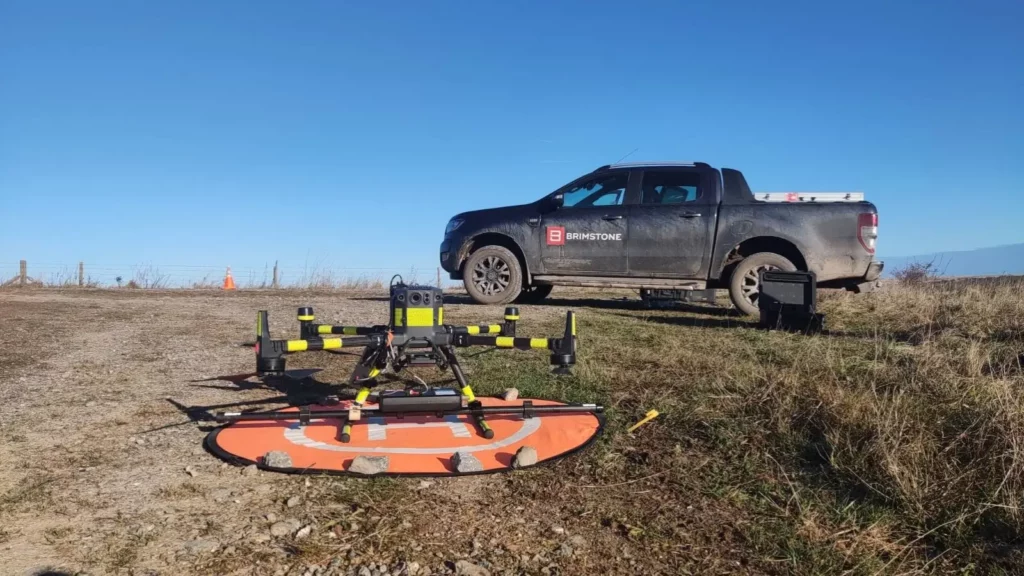
Brimstone UXO has extensive experience supporting solar farm developments throughout the UK. From desktop assessments to advanced drone surveys and onsite risk mitigation, we work with developers, planners and contractors to manage UXO risk at every stage.
If you’re considering a solar project and want peace of mind that your site is safe, we can help. Our drone surveys are an especially valuable tool for renewable projects on greenfield and agricultural land.
Get in touch with our team via email at enquire@brimstoneuxo.com or by calling 020 7117 2492.
You can follow us on Facebook, Instagram, X, LinkedIn and YouTube for updates on our latest work and sector news.
If you enjoyed this blog, you may also like:
- UXO Risk Mitigation for 7 Solar Farms Across the UK
- Why UXO Risk Matters in the UK’s Renewable Energy Future
- UXO Risk and Battery Storage Projects | What Developers Should Consider
- Leasing Land for Energy Projects | The Overlooked UXO Risks for Farmers and Landowners
- UXO Risks and Wind Farms | What Developers Need to Know
"*" indicates required fields