Remnant Q3 Review: 71 UXO Incidents Across the UK
Between July and September 2026, Remnant logged 71 reported UXO incidents across the UK, an average of almost one reported incident every 31 hours.
The finds ranged from First World War shells on farm tracks to air-dropped bombs recovered from harbours. They turned up on beaches, construction sites, beside roads and railways, and in residential areas.
More than 80 years after the war that produced most of these items, wartime ordnance continues to surface across the country. Here is what the quarter’s data shows.
Volume rose month on month
Recorded incidents climbed steadily through the quarter, from 19 in July to 24 in August and 29 in September. Some of that is seasonal: warmer months bring more people onto beaches, more construction, more groundwork and more metal-detecting, all of which turn up ordnance that has lain undisturbed for decades. A rise across a single quarter is not a trend in itself, but it is a reminder that discovery is largely driven by human activity.
A UK-wide picture
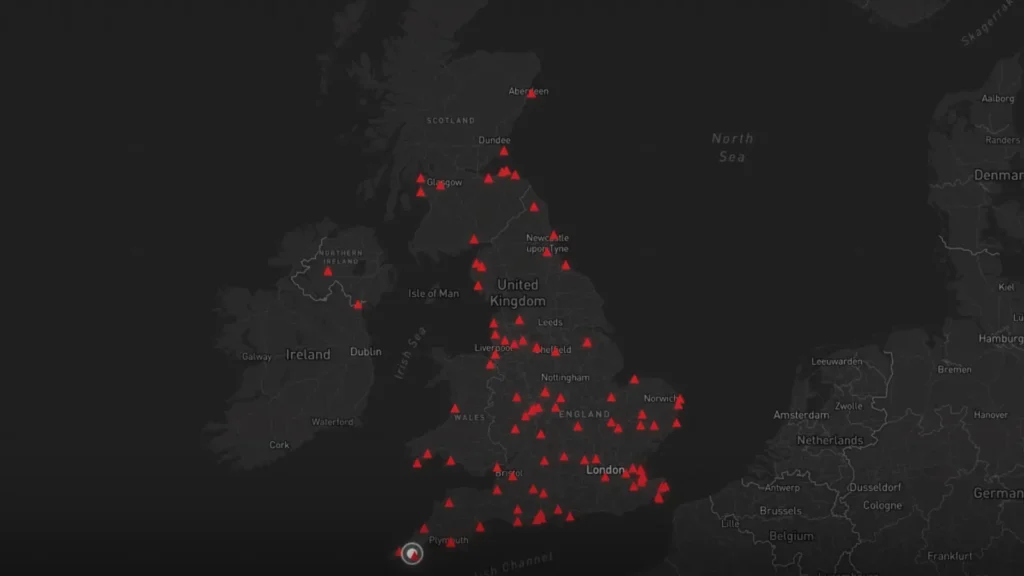
The finds were not confined to any one region. They ran from Lerwick and Dunoon in the north to Falmouth and Lands End in the southwest, took in Wales at Llanelli, Narberth and Ynyslas, and covered the full breadth of England in-between. Unexploded ordnance is not a problem of particular cities or coastlines; it is distributed across the country and comes from a range of sources including war time bombing, defensive activities, military training and manufacturing.
The pattern changed as the quarter progressed
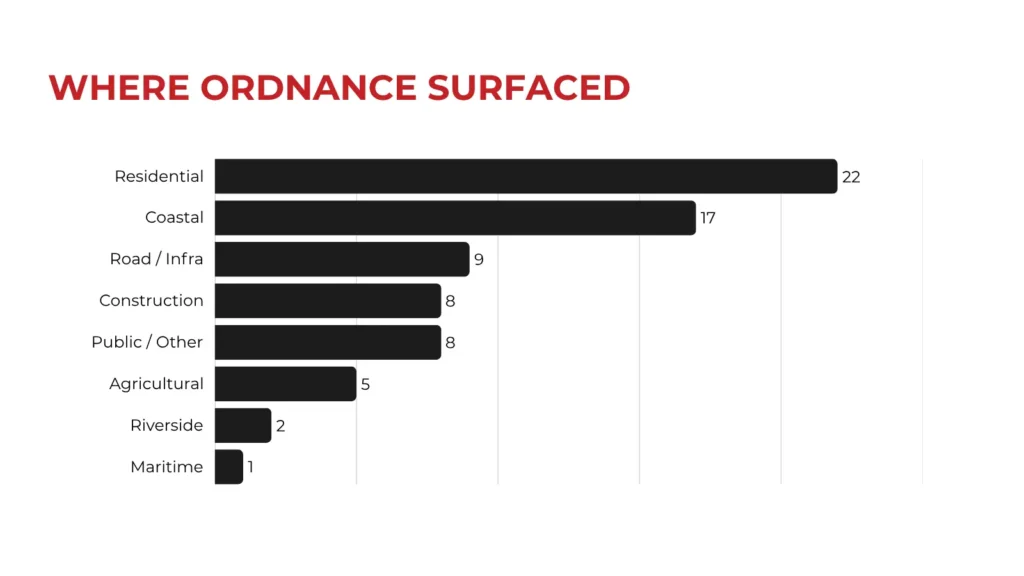
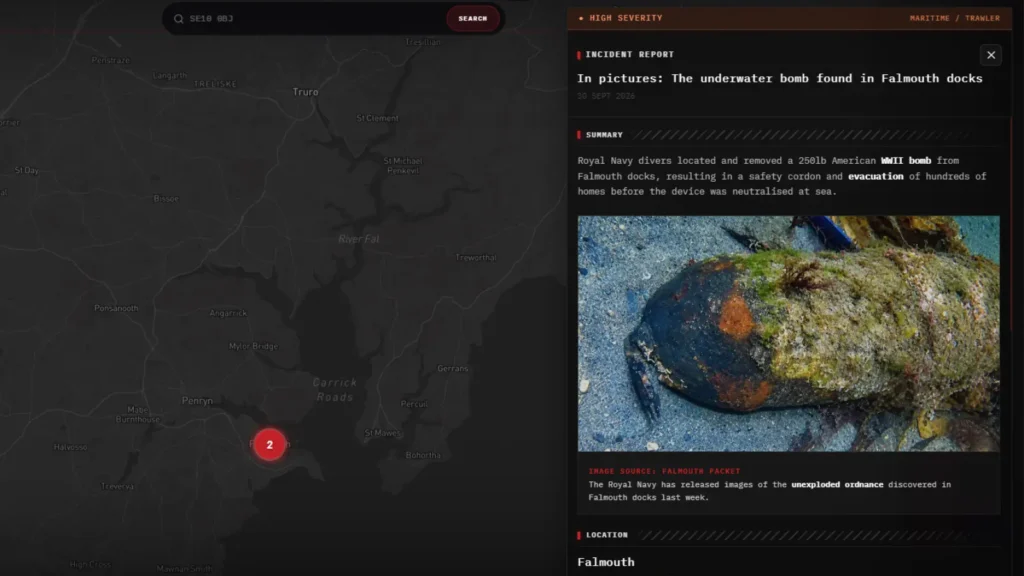
The most striking pattern is in setting. July was dominated by residential finds in gardens, homes and outbuildings, which outnumbered coastal finds. August was almost entirely inland. September reversed the picture sharply, with coastal and maritime finds outnumbering residential ones more than two to one, from Drigg and Dunoon to Instow, Southend and a 250lb bomb removed from Falmouth docks.
Across the full quarter, residential settings still accounted for the largest share of finds (22), followed closely by the coast (17). Road and rail infrastructure, construction sites, and agricultural land made up most of the remainder.
Groundworks continue to uncover UXO
A consistent thread through the quarter was ordnance disturbed by development and groundworks. Finds came out of marina test works at Millport, utility works in Bristol, landscaping at St Leonards and flood defence construction at Poole.
UXO can remain undisturbed for decades before being uncovered by routine excavation or other groundworks, making an understanding of a site’s wartime history an important part of project planning. Historical mapping, archival research and site-specific assessment can help identify areas of potential concern before excavation begins, giving project teams the opportunity to determine whether further investigation or mitigation is warranted.
Who finds them
The people reporting these items are as varied as the settings. The quarter’s finds were turned up by metal detectorists in a field at Blyth, a dog walker on a farm track near Bromyard, a twelve-year-old on the beach at Dunoon, construction and utility crews, council survey teams and coastguard units patrolling the shore. Discovery is not always the work of specialists. It is ordinary activity, on ordinary ground, that often brings this material back to the surface.
Severity and outcome
Using Remnant’s incident severity classification, 29 of the 71 reports were rated high severity, including finds that resulted in cordons, evacuations and controlled explosions. Evacuations through the quarter ranged from a handful of homes to several hundred around Falmouth docks.
Equally notable is how many reports turned out to be something else. Around 30 per cent of all incidents, roughly one in three, were confirmed safe or found not to be ordnance at all. The quarter’s non-ordnance reports included old gardening equipment, a discarded cylinder, a bell part from a building site, a smoke float and farming machinery. Each still required a specialist call-out and, in many cases, a cordon before it could be stood down. The volume of non-ordnance reports is not a criticism of those reporting; it reflects how difficult suspected ordnance is to identify on sight, and it underlines the importance of having a clear process for identifying, reporting and managing suspected UXO.
The range of what turns up
The quarter’s finds illustrate the breadth of ordnance that can still be encountered in the UK. Hand grenades in fields at Blyth. A WWI shell on a farm track near Bromyard. A German incendiary at Kemsley. A live naval shell off Shoebury. The quarter also included mortars, artillery rounds, air-dropped bombs and torpedo components. One find near Bromyard dated to the First World War; most originated in the Second. August also saw the excavation of a 1944 V1 flying-bomb crash site at Chetney Marsh, the quarter’s one reported find that was sought rather than stumbled upon.
What the quarter tells us
Across the three months, the same points recur. UXO is found across the whole of the UK, not in one particular region. It is usually uncovered through ordinary activity, by people working, building or walking, rather than deliberate searching, and around a third of reported items turn out not to be ordnance, despite still requiring a specialist response before they can be confirmed safe.
Individually, these points are well understood. Tracked consistently over time, however, they provide something more useful: a clearer picture of where UXO is being encountered, what activities are uncovering it and how the risk is changing.
That’s the purpose of Remnant. By continuously monitoring verified open sources and mapping reported UXO incidents across the UK, Remnant turns individual discoveries into an evolving national picture.
Explore the Remnant map at brimstoneuxo.com/remnant.
For regular UXO intelligence, data insights and platform updates, follow Remnant on Instagram, LinkedIn and X.
"*" indicates required fields