The Top 15 Mistakes Housing Developers Make Regarding UXO
Housing developments, especially those built on previously undeveloped land, can present a range of unexpected challenges. Among the most overlooked risks is the potential presence of unexploded ordnance (UXO). While many developers assume UXO is a rare or distant threat, the reality is that much of the UK’s land bears the legacy of wartime activity, military training, and former industrial use.
At Brimstone UXO, we’ve supported housing developers across the country in identifying, managing, and mitigating UXO risks. Through this work, we’ve seen a number of common mistakes that can cost time, money and, more importantly, compromise safety.
Here are the 15 most common mistakes developers make when it comes to UXO – and how to avoid them!
1. Assuming UXO Risks Don’t Apply to Their Site
One of the most frequent and dangerous mistakes is assuming UXO is only an issue in major cities or known military areas. In fact, bombing during the Second World War was far more widespread than many realise. Coastal locations, industrial hubs, former RAF bases and training grounds, and even rural areas can all carry a legacy of UXO.
On top of this, UXO contamination isn’t limited to just German bombs. British and Allied forces used countless training areas, storage depots, manufacturing sites and testing grounds during both world wars and beyond. These sites can leave behind Allied ordnance, smoke bombs, grenades, or even experimental munitions, sometimes with little documentation.
At Brimstone, we always recommend a Preliminary UXO Risk Assessment as a first step for any development. Our assessments look beyond enemy action and include potential contamination from all known military use. This low-cost, desk-based study can help determine whether further investigation is required, and can often rule out risk entirely.
2. Delaying UXO Risk Assessments Until Late in the Project
Some developers only consider UXO once groundworks have already begun, or worse, when they’ve encountered a suspicious item on site. By this stage, the project may already face delays and increased costs.
Incorporating UXO risk assessments early in the planning process helps avoid disruption, keeps project timelines on track and prevents unexpected costs further down the line.
3. Relying on Generic Desktop Reports Without Contextual Analysis
Some providers offer low-cost, automated reports that lack the in-depth research and interpretation necessary to understand site-specific UXO risks. These reports can be misleading, either overestimating or underestimating actual risk.
At Brimstone our team of experienced researchers use a wide range of resources to create bespoke UXO reports. These include primary and secondary data sources, such as bomb maps, bomb damage records, historical aerial photography, OS mapping, and written military documentation. This human-led approach ensures a realistic and balanced view of the potential hazards.

4. Not Factoring UXO Into Ground Investigation Works
UXO risk doesn’t just apply during construction, it can also affect early site investigations, including borehole drilling, archaeology surveying, geotechnical investigations and trial pitting. Failing to consider UXO at this stage can be both unsafe and non-compliant.
Our on-site UXO services can support your ground investigation works, either through a Watching Brief, where our engineer observes your ground investigations, or through UXO Borehole Support, which clears your boreholes as they progressively deepen.
5. Underestimating the Time Required for UXO Risk Mitigation
When a site is assessed as having a potential UXO risk, further action is often needed, such as a UXO survey, target investigation, or on-site support from UXO engineers. These services involve specialist personnel, technical equipment, and careful planning.
It’s not something that can always be arranged at the last minute. Scheduling constraints, availability of resources, and the need to coordinate with other contractors all mean that UXO mitigation should be factored in early.
At Brimstone, we do everything we can to respond quickly and align with project timelines, but the best results come when UXO risk is given the time and attention it deserves.
6. Overlooking Marine UXO Risks for Waterside Developments
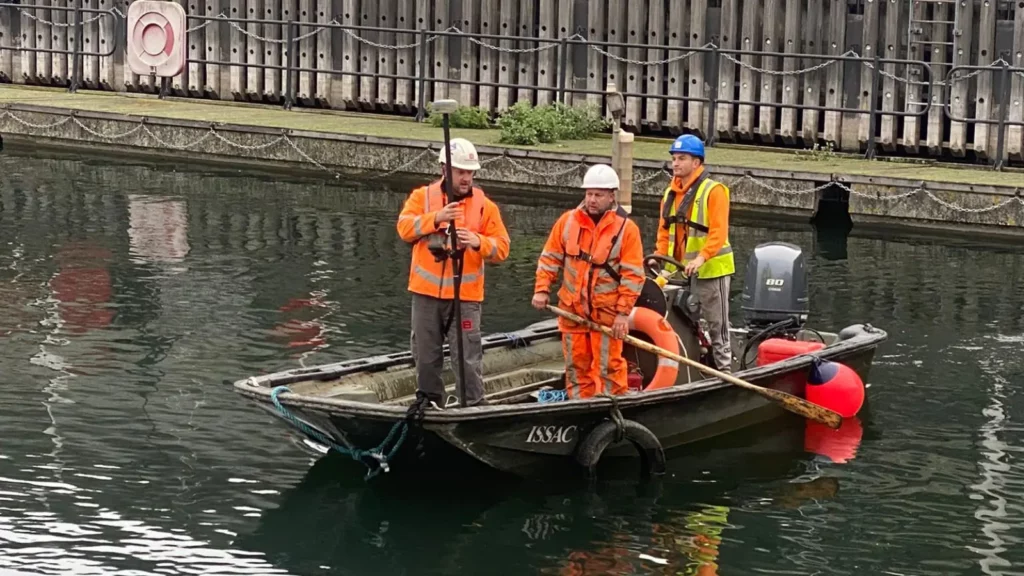
For developments near rivers, canals, or estuaries, underwater UXO can present a hidden threat. Former dockyards, munitions factories, and wartime dumping zones may leave behind ordnance below the waterline. For example, on one marine site in Liverpool, we found 12 items of UXO hidden underwater!
Brimstone provides a multitude of marine UXO services to help manage this specific risk, using equipment and techniques adapted to the marine environment and ex-Royal Navy divers.
7. Failing to Communicate UXO Risks to the Whole Project Team
UXO awareness shouldn’t be limited to senior planners or health and safety managers. Everyone working on site, from subcontractors to groundworkers, needs to understand the potential risks and what to do in the event of a discovery.
We offer Toolbox Talks and ongoing support to help ensure site teams are well-informed and confident in handling UXO-related incidents correctly. We also offer the only online UXO Awareness Course, aimed specifically at the construction industry. Our course consists of five modules of in-depth information and aims to teach candidates about UXO risks, why UXO might be present, and how to respond to a UXO incident.
8. Choosing Price Over Expertise
In an effort to cut costs, some developers choose the cheapest UXO provider, but this can be a risky decision. UXO risk mitigation is a highly specialised field that demands the right experience, equipment, and expertise.
At Brimstone, our teams include former bomb disposal operators from the British Army, Royal Navy and Royal Air Force, supported by in-house researchers, geophysicists and technical coordinators. We’re built around the needs of the construction industry and always work in accordance with CIRIA C681 guidance.
We are also UK government assured and hold a range of industry-leading accreditations. Brimstone is BSI ISO 9001 certified, a Constructionline Gold Member, and holds CHAS Premium Plus status. Many of our engineers are CSCS qualified, and several team members hold security clearance, enabling us to support even the most sensitive or secure sites.
9. Neglecting UXO Risks on Brownfield or Redeveloped Land
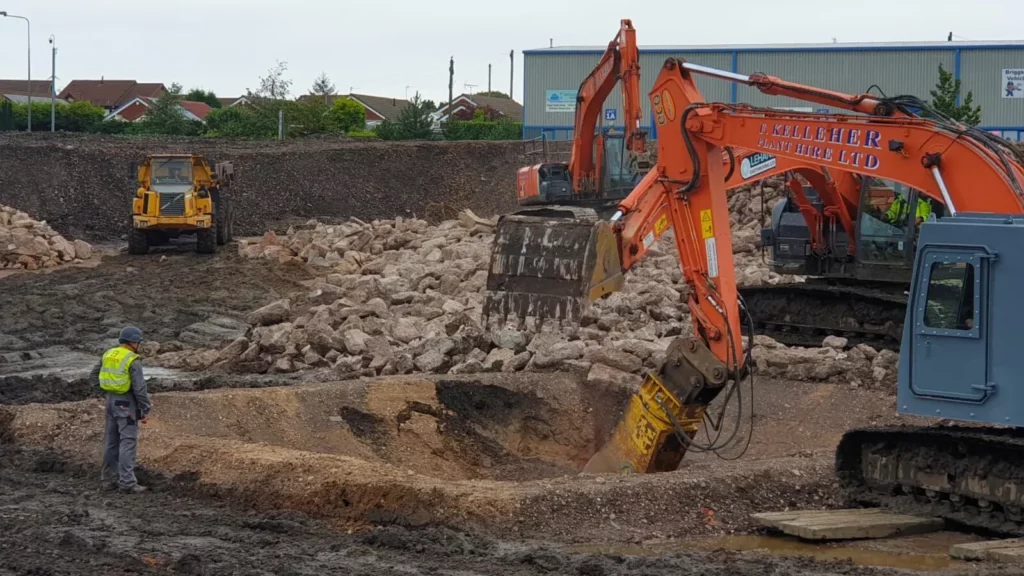
Brownfield sites are often seen as lower risk because they’ve been built on before, but this can be misleading. During WWII, many brownfield sites were located near cities, transport hubs, industrial areas, and key military sites, all of which were targets for bombing raids. Even decades later, UXO remains a potential hazard on these sites due to unexploded bombs from air raids, UXO contamination from former military use such as training, and former industrial activity such as manufacturing which may have left UXO risks behind.
Furthermore, brownfield sites that have been previously developed may not have had the proper UXO risk mitigation checks prior to development. In some cases, ordnance may even have been moved during previous work without being safely dealt with, or was simply missed!
10. Believing UXO Risk Only Applies to London and the Home Counties
A surprising number of developers assume UXO is only a concern in London or the South East. While those areas were heavily bombed, the risk is far more widespread. Key industrial centres, military training areas, coastal defences and airfields across the UK were all potential targets, and many still carry legacy risk today. Of course, as we also discussed already, UXO contamination extends beyond German bombs. The UK had a wide range of defensive measures in place, from Home Guard stations to mine fields and anti-aircraft guns, all of which could have resulted in lasting UXO contamination.
We regularly support developments in locations far from the capital that have credible UXO concerns. Our UXO Risk Assessments take a nationwide view, because the risk isn’t just a postcode issue.
11. Thinking ‘It’s Been in the Ground for 80 Years – It Can’t Still Be Dangerous’
This is one of the most common and dangerous myths we hear. The age of a munition doesn’t make it safe. In fact, corrosion and degradation can sometimes make old devices more sensitive, especially if disturbed.
That’s why every UXO item is treated as potentially dangerous until proven otherwise, no matter how long it’s been buried.
12. Assuming That Past Experience Guarantees Future Safety
Just because you’ve never found UXO on site doesn’t mean it isn’t there. It’s a common belief in the industry, but one that can lead to complacency.
Previous UXO risk mitigation efforts, especially if they were limited or poorly scoped, can give a false sense of security. Site conditions evolve, development boundaries shift, and different phases of work can introduce new risks. Not all providers apply the same level of rigour, and no two sites are ever exactly the same.
Instead of relying on past experience alone, a current, expert-led UXO assessment ensures you’re working with up-to-date, site-specific insight.

13. ‘There’s Been Plant and Machinery Tracking This Land for Years and Nothing’s Gone Off’
Just because nothing has detonated doesn’t mean there’s no risk. UXO can lie just beneath the surface, undisturbed by normal tracking but still dangerous if struck or penetrated in the wrong way.
We’ve seen projects run safely for months until deeper excavations find a live device. Risk management is about being proactive, not lucky!
14. Not Revisiting UXO Risks After Changing Site Plans
Development plans often evolve, but many developers forget to reassess UXO risks when layouts, boundaries, or construction methods change. A low-risk area in the original plan might now involve deeper excavation or fall within a zone previously considered higher risk.
UXO risk mitigation efforts should always reflect the current scope of works, not just the initial concept.
15. Thinking ‘UXO’ is a Word… Not an Acronym
And finally, a light-hearted one, but we hear it more than you’d think! It’s U-X-O, not “uh-ox-oh.” It stands for Unexploded Ordnance. But, however you say it, we’ll still help you deal with it.
Moving Forward with Confidence
The good news is that every one of these mistakes is avoidable. By acknowledging the potential risk early and seeking the right support, housing developers can ensure safe, efficient progress, without unexpected delays or costs.
If you’re working on a new build site, redevelopment project, or simply want to rule out UXO as a concern, we’re here to help. Get in touch with our team for expert guidance, straightforward advice, and responsive support across all stages of your development.
Explore our website or contact us directly to speak with our team.
You can also follow us on Facebook, Instagram, X, LinkedIn and YouTube for updates on our latest work.
If you enjoyed this blog, you may also like:
- Why You Should Plan for UXO Risk Mitigation from the Start of a New Build Project
- What Every Developer Needs to Know About UXO Risks on Brownfield Sites
- Why Green Belt Land Could Have UXO Risks: What New Build Developers Need to Know
- How to Manage UXO Risks on Construction Sites
- The Cost of Ignoring UXO Risks
- The UXO Risks of Former Military Land Being Repurposed for Housing
"*" indicates required fields