The Risks of Ignoring UXO in Geotechnical Projects
Understanding what UXO risk actually means for a geotechnical project is the first step to managing it well. The risk falls into three areas: the safety of people on site, the impact on programme and budget, and the regulatory responsibilities that sit with everyone involved. This post looks at each of those in turn, so teams can see why early action is worthwhile.
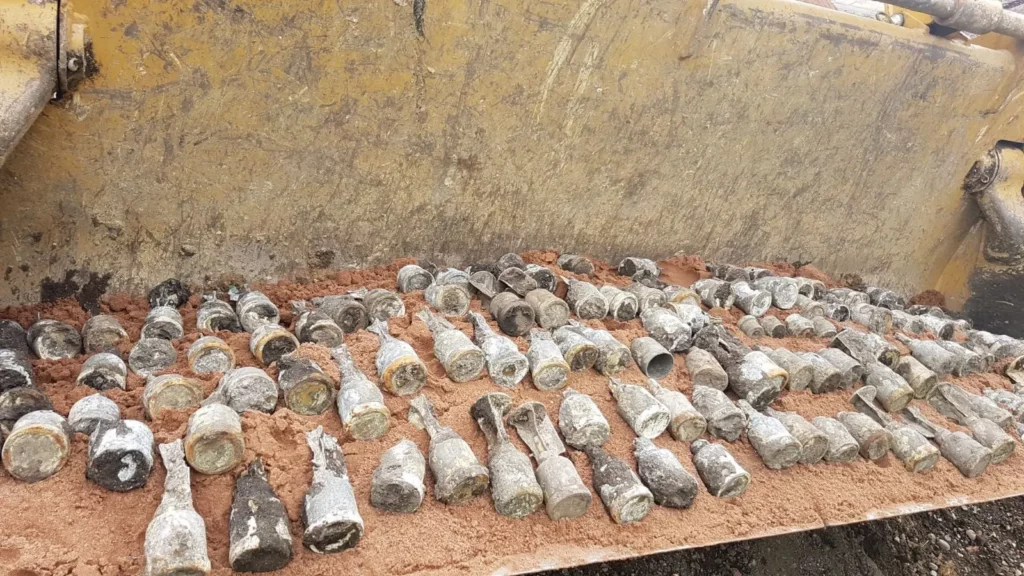
Unexploded ordnance can remain buried for decades, often since the First or Second World War, undetected until groundworks or geotechnical surveys disturb the area. Geotechnical projects are particularly exposed, because site investigations, borehole drilling, and pile installation all involve penetrating deeper ground layers where ordnance may lie. The question is not whether the risk is real, but what happens when it is not addressed.
Safety Risks to Personnel
The most immediate danger of UXO is to the safety of site personnel. Even small items of buried ordnance can detonate if disturbed, posing a fatal risk to workers operating drilling rigs, excavators, or other ground investigation equipment. In many cases the ordnance is corroded or partially degraded, making it unpredictable and highly sensitive to movement or vibration. Activities such as soil sampling, dynamic probing, and trial pit excavation can trigger a device if its presence has not been identified.
Ensuring potential UXO hazards are assessed and mitigated before any intrusive work begins is therefore essential, not only to protect on-site teams but to meet the health and safety obligations.
Project Delays and Increased Costs
Beyond the human risk, discovering UXO during active works causes significant disruption. When ordnance is found, all operations must stop immediately until the site is declared safe. This can mean unplanned downtime, the mobilisation of specialist UXO teams, and coordination with local authorities or the Ministry of Defence.
Even a short delay can create a domino effect, pushing back schedules, affecting subcontractors, and driving up costs for plant hire, staffing, and logistics. Some projects face contractual penalties for missed deadlines, or reputational damage from a perceived lack of preparation. Early UXO risk management avoids these scenarios by identifying and dealing with hazards before they can cause disruption.
Legal and Regulatory Implications
The Health and Safety at Work Act 1974 and the Construction (Design and Management) Regulations 2015 place a legal duty on employers and project managers to assess and control all foreseeable risks to health and safety. UXO is one such risk.
Failing to take appropriate action, such as neglecting to commission a UXO risk assessment, or ignoring known historical risks, can be deemed a breach of these regulations, potentially resulting in investigation by the Health and Safety Executive (HSE), legal liability, and in serious cases, prosecution. Developers, consultants, and contractors all share responsibility for ensuring UXO hazards are identified and managed in line with best practice, as set out in CIRIA C681.
Managing the Risk: A Proactive Approach
The most effective way to manage UXO risk is through proactive assessment and planning. A staged approach beginning with a preliminary desk-based UXO risk assessment helps determine whether a site is likely to contain unexploded ordnance. Where a potential risk is identified, further research and investigation can follow, and where intrusive works are necessary, borehole clearance and on-site UXO engineer support allow deeper ground investigation to proceed safely.
Partnering with experienced UXO specialists ensures all potential risks have been considered and mitigated, protecting people and assets while allowing the project to progress efficiently.
A Risk Too Serious to Ignore
The presence of UXO in geotechnical projects is more than a theoretical concern. By addressing it early in the planning and investigation stages, project teams safeguard personnel, prevent costly delays, and maintain compliance with UK health and safety requirements. Ignoring UXO is a gamble no construction or geotechnical project can afford to take.
If your project involves intrusive groundworks on land with a potential wartime or military history, a preliminary UXO risk assessment is the first step to identifying and managing that risk before work begins. Get in touch to discuss your site, or learn more about our UXO risk assessment services.
Learn more about Brimstone UXO by following us on Facebook, Instagram, LinkedIn and YouTube.
"*" indicates required fields