UXO Surveys for Construction and Infrastructure Projects_
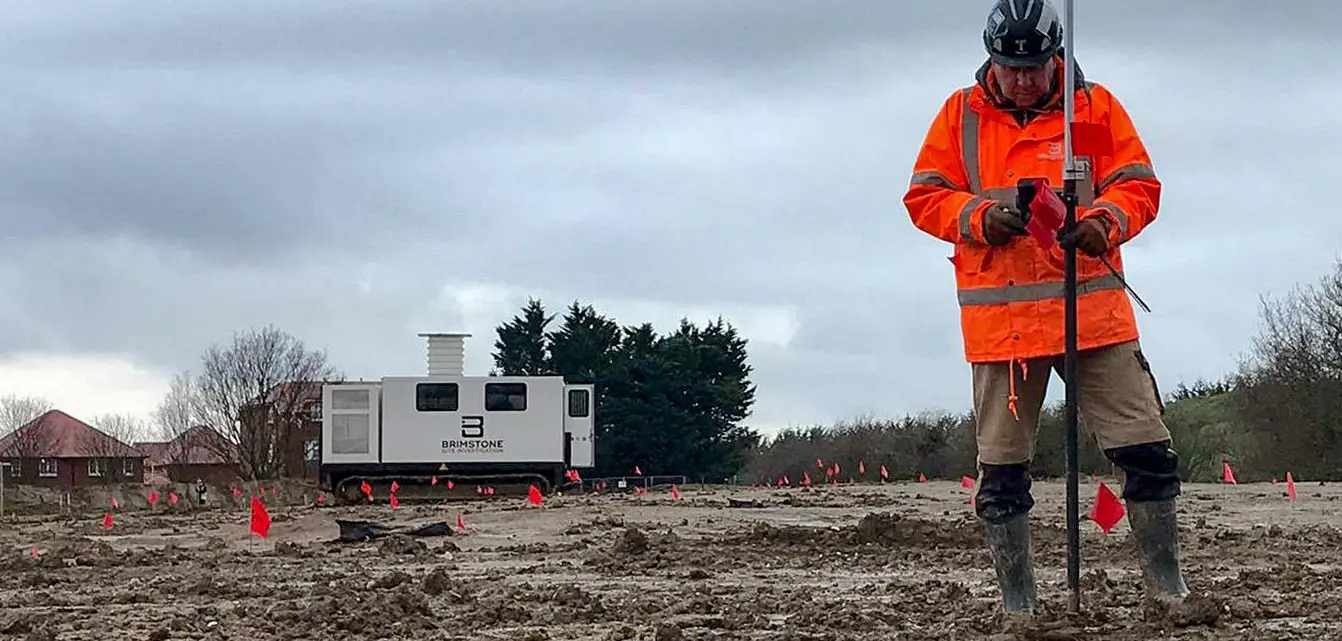
Brimstone provides UXO surveys across the UK, detecting buried unexploded ordnance before construction, piling, or ground investigation begins.
Whether broad coverage is required across open areas or a deeper investigation at specific positions, we provide both non-intrusive and intrusive survey options to suit your project.
Our surveys are carried out by qualified specialists using industry-leading equipment, with all data interpreted by our in-house geophysics team. This ensures clear, reliable results and informed decision-making at every stage.
What is a UXO Survey?
A UXO Survey is a site-based investigation used to detect and map buried metallic anomalies that may be unexploded ordnance (UXO) beneath the ground. It provides clarity on whether hazards may be present before intrusive ground works begin, supporting safe and compliant project planning in line with CIRIA C681 guidance.
Many sites across the UK have been affected by wartime bombing, historic military training and disposal practices. Even where there is no surface evidence, buried UXO can remain. A survey confirms whether items of concern may be present so that risks can be reduced to a level that is as low as reasonably practicable.
A survey usually follows a UXO Risk Assessment where a credible risk has been identified. It is typically undertaken before piling, ground investigation, excavation or deep foundation works.
If you are unsure whether your site requires a survey, our specialists can advise based on location, planned works and site history.
There is no single approach that fits every project. The survey type depends on ground conditions, access, depth of investigation and expected risk.
Non-intrusive methods provide broad, efficient coverage where shallow risks are anticipated, while intrusive surveys are used to explore deeper anomalies or work in areas of made ground. If you’re unsure which survey method is best for your project, our team will be happy to help you find the most suitable solution.
UXO surveys are carried out in accordance with the principles set out in CIRIA C681, which provides guidance on managing the risks from unexploded ordnance in the construction industry.
This framework promotes a structured, evidence-based approach to UXO risk management, from initial assessment through to survey and, where necessary, mitigation. By following this guidance, surveys are designed to be proportionate to the identified risk while supporting safe working practices and regulatory compliance.
Non-Intrusive UXO Surveys_
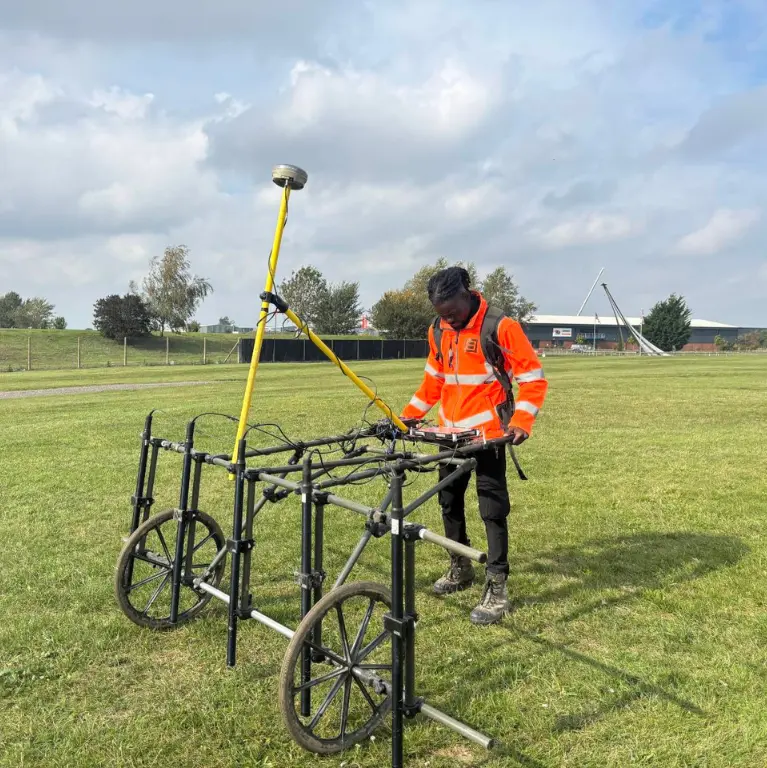
Using pushcart, towed-array or drone-mounted magnetometers, we carry out non-intrusive UXO surveys to detect shallow-buried metallic anomalies, such as land service ammunition or small bombs, typically to an assured depth of 4 metres. In some cases, larger ordnance may be detected at greater depths.
Our multi-channel sensor systems enable efficient, accurate coverage of large areas, without disturbing the ground.
A five-channel system for the detection of ferro-magnetic anomalies in small to medium sized areas carried out by a specialist two-person team.
An eight-channel gradiometer system for the detection of ferro-magnetic anomalies in large areas carried out by a specialist two-person team. Towing the sensors behind an all-terrain vehicle and the wider sensor array increases time-efficiency without detriment to resolution or quality.
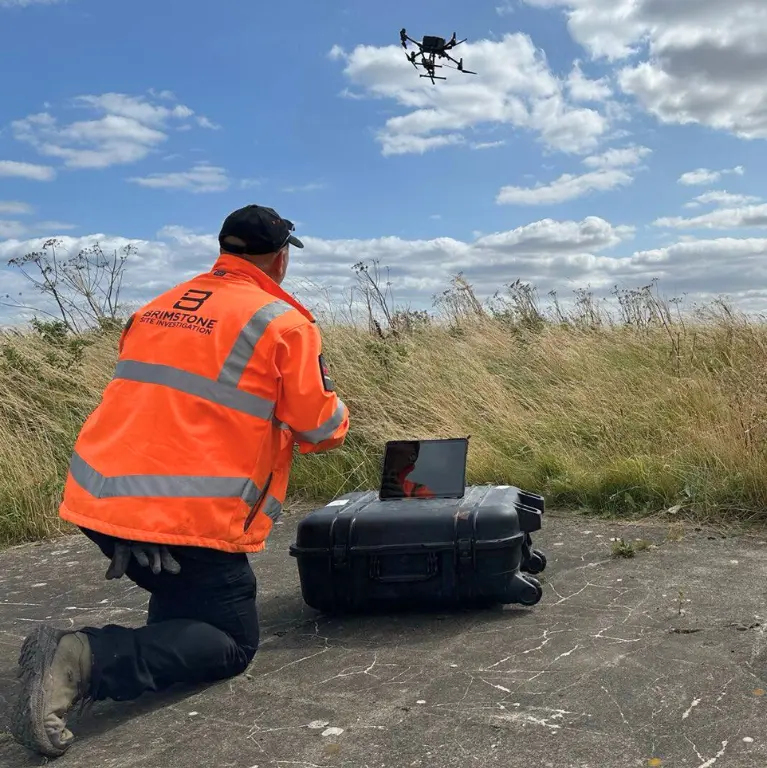
Our specialised drones enable us to carry out UXO surveys in areas where a pushcart or towed-array system cannot reach. Brimstone is proud to have been the first company, both within the UK and overseas, to market drones for UXO surveys, and we continue to develop our systems to ensure maximum benefits for our clients.
Collected data is processed by our geophysics team using specialist software that compares anomalies against a library of known UXO signatures. We estimate depth, mass, and location to within 5 cm accuracy, delivering clear findings and actionable recommendations.


Intrusive UXO Survey_
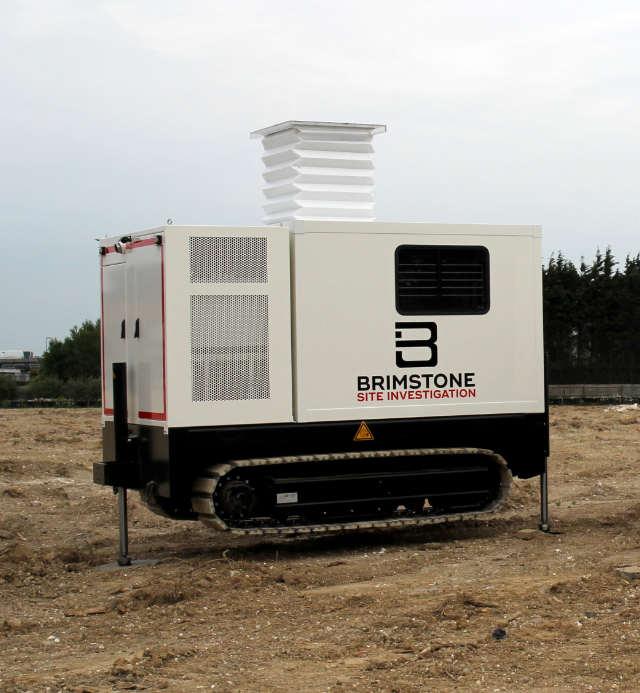
At Brimstone, we use specialist Cone Penetrometer Testing (CPT) rigs to deliver intrusive UXO surveys across a wide range of ground conditions. These rigs are suited to both single pile locations and clusters, supporting deep intrusive works where a UXO risk has been identified.
For larger developments, we can undertake a site-wide intrusive survey using a structured grid or matrix approach. This provides comprehensive coverage across the working area, with investigation depths of up to 25 metres. Our system is also triaxial, meaning it can also model targets in three dimensions. This allows for more than one pile position to be cleared per one survey position, keeping costs down and projects moving along.
Intrusive UXO surveys are commonly required ahead of piling, drilling, and other deep groundworks where there is a risk of unexploded ordnance at depth. These activities present a risk due to the potential for direct contact with buried items.
Our intrusive survey methodology is designed to identify and characterise ferrous anomalies along the proposed line of works before intrusive activities begin. By surveying pile positions or borehole locations in advance, we can reduce the risk to a level that is as low as reasonably practicable.
Where required, surveys can be undertaken on a point-by-point basis for individual pile locations, or as part of a wider grid to support high-density piling or large-scale drilling programmes. This approach allows developers and contractors to proceed with confidence, reducing the likelihood of unexpected delays or the need for reactive UXO mitigation during construction.
A key advantage of intrusive UXO surveys is their suitability for sites where non-intrusive techniques are limited or not viable. This includes brownfield land and areas of made ground.
The methodology also allows for greater investigation depths compared to non-intrusive surveys, making it particularly effective for projects involving deep foundations or ground penetration.
All detected anomalies are reviewed and interpreted by our in-house geophysicists. Where a feature presents characteristics consistent with a potential unexploded bomb (UXB), it is classified and assessed, and appropriate next steps are defined. Our operations team will then work with the client to plan and implement the most suitable risk mitigation strategy, ensuring works can continue safely and in line with project requirements.
Recent UXO Survey Projects_
Drone UXO Survey_
Time, safety and budgetary constraints are a factor in all construction related projects. Drone systems routinely deliver superior survey coverage, surveying up to five times as many hectares in a single day compared to the push-cart system. Drone systems are also highly suited to difficult to access areas.
Our drone systems are highly suited to accessing challenging or remote locations with ease, providing comprehensive surveying solutions in diverse environments. Penetrating down to an assured depth of 4 metres below the surface, we check for potential hazards by using magnetometry to detect ferrous materials and map magnetic signatures. We then send the results back to our experienced geophysicists for analysis.
Our radiation sensors are designed to autonomously capture gamma sources by following pre-determined flight waypoints. When they detect radiation, it immediately triggers an alert, complete with GPS coordinates, which is transmitted to the operational base station. These coordinates are then plotted on radiation maps, allowing for real-time comparison against highlighted changes in isotopes across the entire survey area.
Frequently Asked Questions_
An unexploded ordnance (UXO) survey is a specialist investigation designed to identify potential unexploded ordnance (UXO) hidden beneath the ground. Using advanced detection methods, surveys locate buried metallic objects that may pose a risk to site works.
An Intrusive UXO Survey physically probes into the ground to detect and confirm the presence of buried UXO. A Non-Intrusive UXO Survey, on the other hand, uses surface-based or aerial sensors to scan for anomalies without disturbing the soil. These can be deployed in pushed, towed, or aerial formats depending on site conditions.
Survey data is analysed by Brimstone’s in-house geophysics specialists using advanced modelling and bespoke software. This allows us to identify signals, estimate the depth and size of anomalies, and pinpoint exact locations with high accuracy.
Following analysis, clients receive a comprehensive report with clear recommendations. If potential UXO targets are identified, our engineers may be deployed for further investigation. Where no anomalies are detected, clients can move forward confidently, knowing the UXO risk has been effectively addressed.
Many UK sites have a history of wartime activity, military training, or bombing during the Second World War. An unexploded ordnance survey helps to confirm whether there is a risk on your site, ensuring you can proceed safely and in compliance with regulations.
UXO surveys are usually undertaken after a desk-based risk assessment has identified a potential risk. The survey should be completed before ground works begin, so that any hazards are identified and mitigated early.
The duration depends on the size and complexity of the site, as well as whether an intrusive or non-intrusive method is used. Smaller areas can often be surveyed in a day, while larger or more complex projects may require longer.
While not legally mandatory, health and safety regulations place a duty of care on developers and contractors to identify and mitigate potential risks – including UXO. A survey provides evidence that appropriate steps have been taken to ensure site safety.
Areas most affected by bombing during the Second World War, including major cities, industrial centres, and key infrastructure locations, are often considered higher risk. Coastal areas and former military training grounds may also present an elevated risk.
However, UXO contamination is not limited to these locations. Sites associated with wartime manufacturing, storage, or military use can also present a risk, even where there is little or no visible evidence today. Each site should therefore be assessed on its own historical context rather than location alone.
The cost of a UXO survey varies depending on the size of the site and the survey methodology required.
As each project is different, costs are usually provided on a site-specific basis. Our team can provide a clear and transparent quotation once we understand your requirements.
Arranging a UXO survey is a straightforward process. When you get in touch, our Commercial Team will request a few key details to fully understand your site and requirements. This typically includes the site location, a redline boundary, and information about the proposed works.
For intrusive surveys, we will also ask for drawings of the proposed pile layout or drilling positions so we can accurately plan the survey.
Using this information, we will recommend the most appropriate survey methodology and provide a clear proposal outlining the scope of works. Once agreed, the survey can be scheduled to align with your project programme.
Survey data is processed by our in-house geophysics team, who clean, filter, and analyse it using specialist software. Anomalies are compared against known UXO signatures, with estimated depth, mass, and location accurate to 5 cm.
If a potential UXO is detected, we recommend a targeted investigation by our engineering team and advise that no intrusive works take place until the risk has been addressed. All findings and next steps are provided in a clear, detailed report.
Get a quote for your UXO Survey
Tell us about your site and we will come back with a fixed quote within one working day. Prefer to talk? Call 0207 117 2492 or email enquire@brimstoneuxo.com.
"*" indicates required fields
Not Sure Which Survey
You Need?
Answer a few simple questions and we’ll guide you to the most appropriate service.