Everton Football Stadium_
CASE STUDY
Brimstone conducted a marine UXO survey at the site of Everton Football Club’s new stadium development at Bramley Moore Dock, Liverpool. As a result, 12 items of ordnance were discovered and safely disposed of.
Brimstone UXO was commissioned to conduct a marine unexploded ordnance (UXO) survey at the site of Everton Football Club’s new stadium development at Bramley Moore Dock, Liverpool. Given the site’s location within a historically significant dock area and its proximity to key WWII targets, an extensive UXO risk mitigation strategy was necessary to ensure safe construction operations.
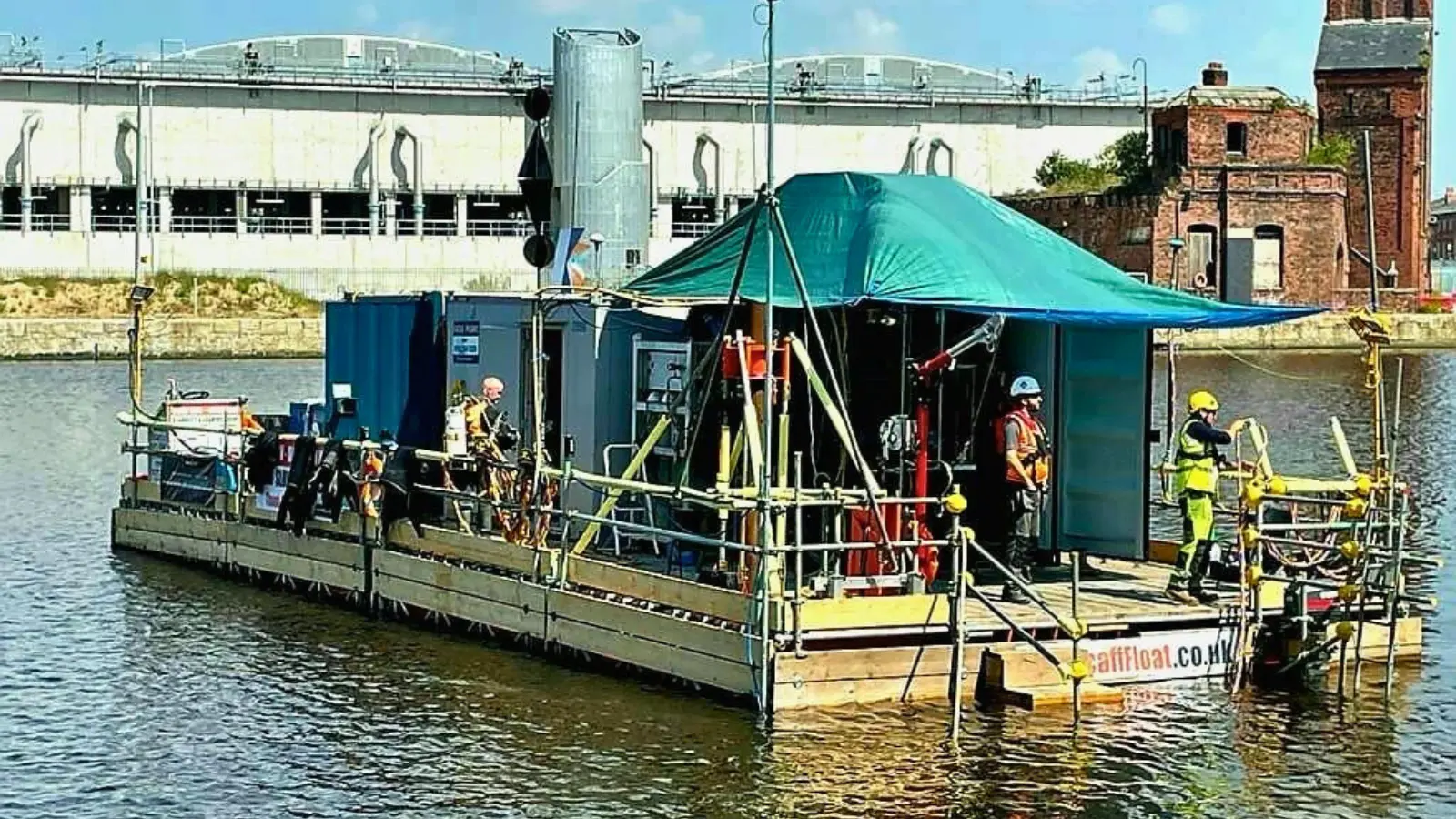
Due to the scale and complexity of the project, we deployed two pontoons working 24/7 to meet the demanding schedule. This intensive approach allowed us to ensure thorough coverage of the site while maintaining efficiency. The dock’s historical significance, coupled with the challenges posed by UXO risks, meant that a precise and methodical approach was essential to deliver safe and accurate results. By leveraging advanced marine survey technology and experienced personnel, we successfully mitigated UXO risks, supporting the seamless continuation of the Hill Dickinson Stadium development.
Historical content and UXO risks
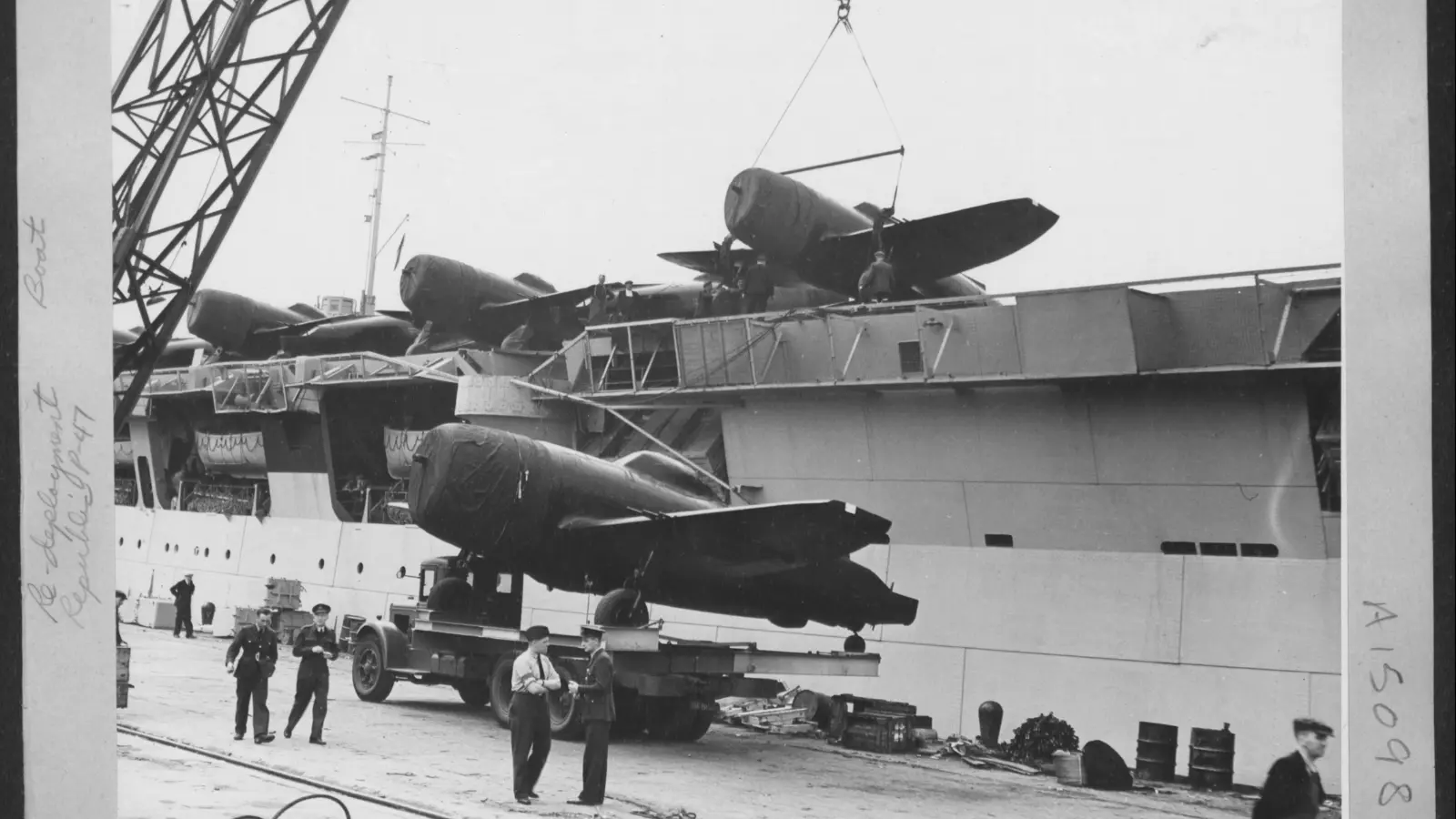
Merseyside played a crucial role in Britain’s WWII logistics, serving as a primary hub for military equipment and supply shipments, with Liverpool handling 90% of the nation’s imported war materials. As a result, the region was heavily targeted during the war, suffering repeated air raids by the Luftwaffe. While no direct UXO records exist for the development site itself, its location within an area subject to extensive bombing suggested a strong potential for buried ordnance, particularly within the dock waters.
The potential UXO risks for this site included:
- WWII-era German air-dropped bombs
- WWII-era British anti-aircraft artillery (AAA) projectiles
Given the site’s history and the likelihood of UXO being buried in sediment, Brimstone UXO implemented a multi-phase risk mitigation approach for Everton’s new football stadium.
UXO survey and investigation approach
Phase 1: Marine survey with ROV technology
We used a remote-operated vehicle (ROV) to conduct the survey, systematically scanning the dock bed for potential items of UXO. Magnetic detection equipment was mounted on the front of the ROV, which enabled the highly detailed magnetic mapping of the survey area. Positioning was achieved using a USBL (Ultra-Short Baseline) acoustic tracking system and Differential GPS, ensuring precise mapping of detected targets.
Our teams were able to operate the ROV from the dockside, while the survey and data logging computers were mobilised in a van. At the end of each day, the survey data was transferred for processing and quality checking by a team of geophysicists. The data underwent several steps to reduce noise and improve the survey quality before a specialist computer model was used to look at the signals measured by the equipment. These signals were then compared against a bank of known UXO signals. The data processing software presented a list of possible UXO targets along with their estimated depth, mass and locations in coordinates.
Through the survey, 170 potential targets were identified across the site. However, certain areas were challenging to access due to magnetic interference from dock walls and moored tugboats, limiting the ability to survey every section comprehensively. Despite these challenges, the team successfully mapped the majority of the dock bed, identifying key locations requiring further investigation.
Phase 2: Diver investigation and UXO identification
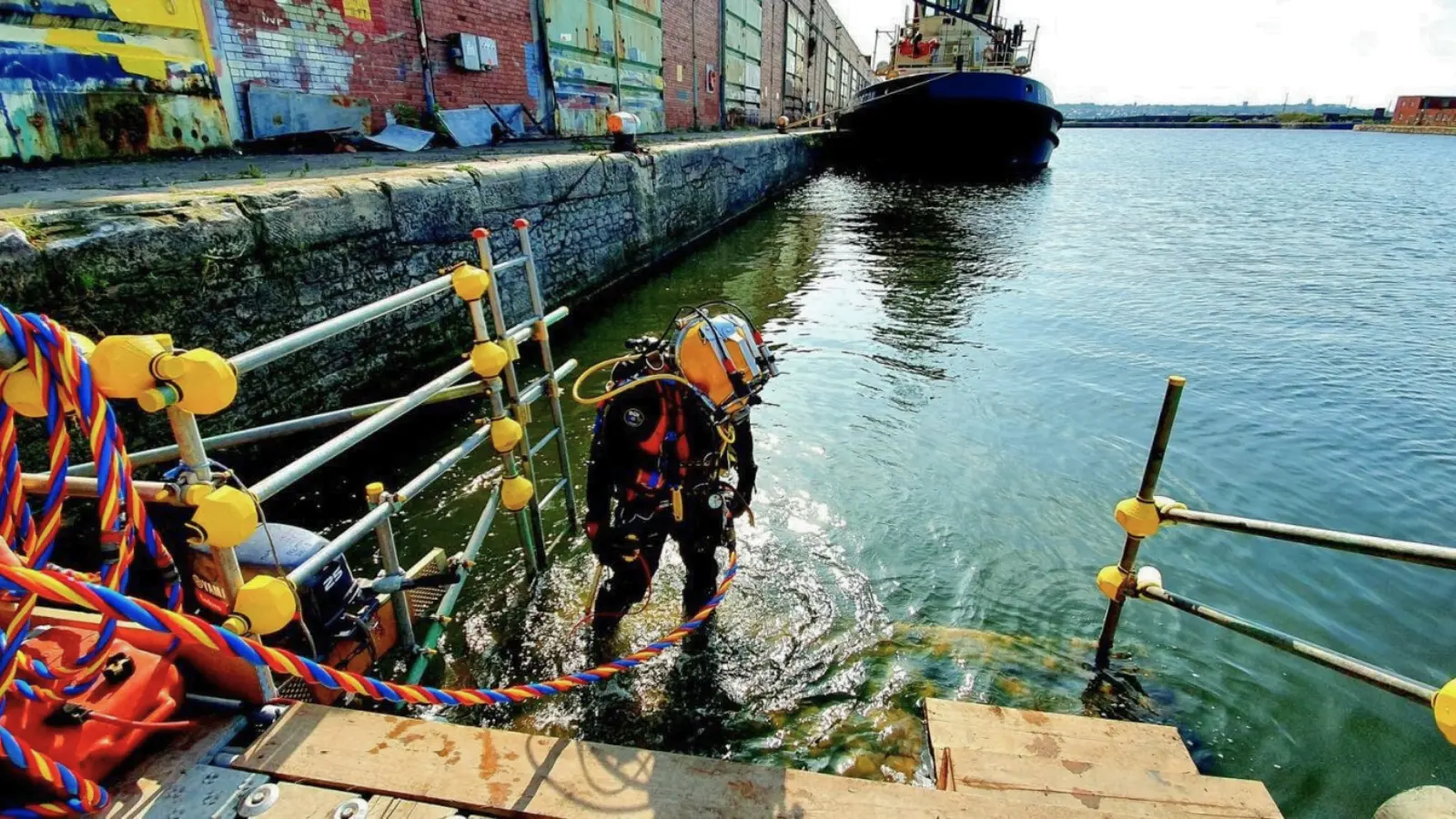
To gain a more detailed understanding of priority targets, Brimstone returned to the site and collaborated with Dagger Diving to conduct diver-based inspections. These operations were carefully supervised by our advanced Explosive Ordnance Disposal (EOD) engineers, ensuring that all investigations were carried out with the highest level of precision and safety. The divers systematically examined and recovered UXO items where necessary.
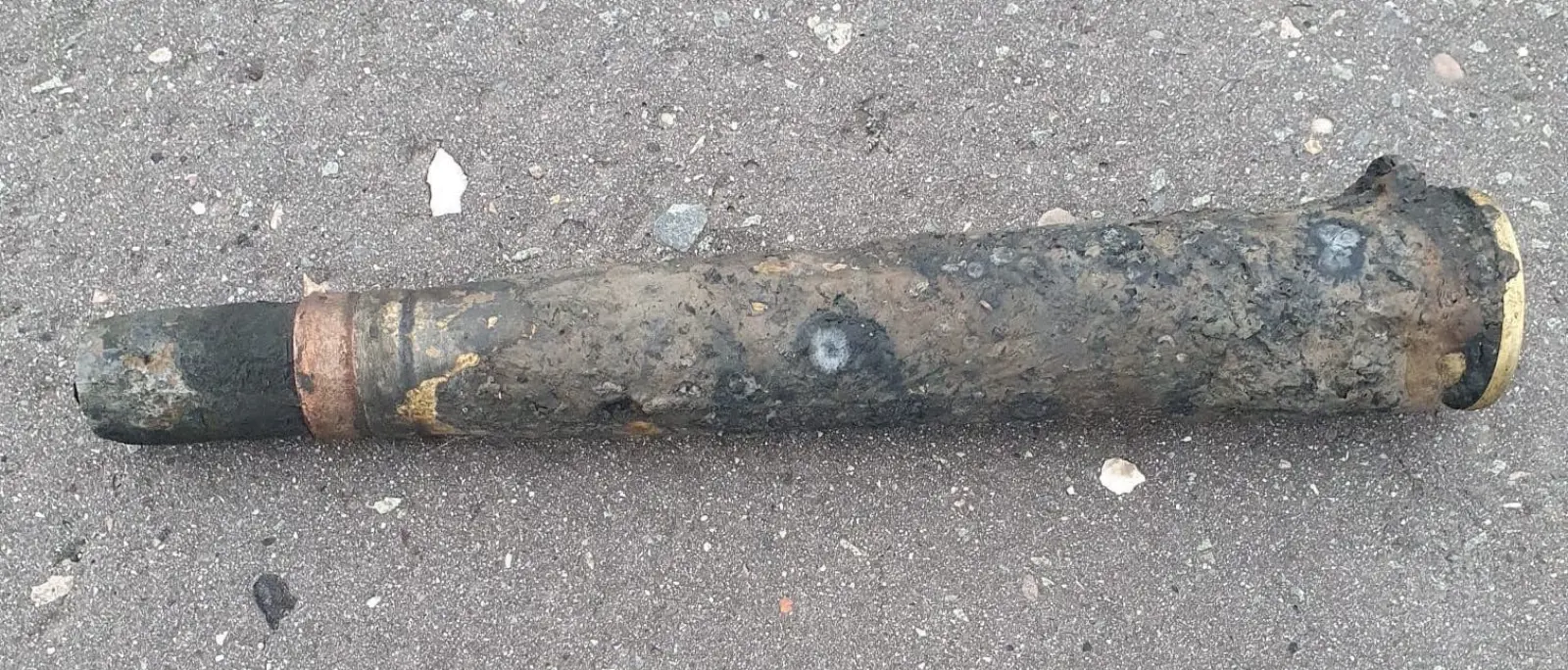
During the investigation, a total of 400 targets were ultimately identified, as overlapping signals and previously masked items became apparent. Among the 12 UXO discoveries made was a 40mm Bofors Gun Round, which was found intact with its high explosive infill and propellant still present. The ordnance was assessed as safe to move and subsequently removed. The Army’s EOD unit was notified and later confirmed its UXO status before conducting a controlled disposal on-site, ensuring the safety of ongoing construction activities.
Project outcomes
Following the completion of the survey and UXO clearance, Brimstone was able to provide an ALARP certificate to the client. The site’s overall UXO risk level was successfully reduced from medium/high to low, ensuring that construction could proceed safely.
Final clearance details included:
- All pile locations surveyed and mitigated
- All identified UXO removed
- No further UXO mitigation required.
Our Marine UXO Services
Brimstone UXO’s comprehensive marine UXO survey and clearance operations played a crucial role in facilitating the safe redevelopment of Bramley Moore Dock. By combining state-of-the-art ROV survey techniques with diver intervention, we ensured that the development of Hill Dickinson Stadium could move forward with confidence, free from the risks associated with historic unexploded ordnance.
For more information on our marine UXO services or to discuss a potential survey, please contact our Commercial Team.
Need help with UXO but not sure where to start?_
Answer a few quick questions and we’ll point you in the right direction.