Exploring WWII Decoy Sites in the UK
Understanding unexploded ordnance (UXO) contamination in the UK often involves uncovering hidden histories, and one fascinating aspect of this is the existence of WWII bombing decoy sites. These strategically designed illusions played a crucial role in diverting enemy bombers away from key military and civilian targets. While most of these sites were dismantled after the war, their legacy persists, particularly in the form of UXO contamination, which can pose a risk to modern construction and development projects across the country.
What were Decoy Sites?
The construction of bombing decoy sites in the UK began in January 1940, even before the first major air raids of the war in July of that same year. Often referred to as dummy sites or decoy targets, these locations were built to mislead German bombers into attacking uninhabited areas instead of real military and industrial sites. By replicating the appearance of key infrastructure from the air, these sites served as a crucial component of Britain’s air defence strategy.
Decoy sites were designed to resemble real targets such as airfields, factories, ports, and even entire cities. They featured dummy structures, simulated lighting, and even staged fires to make them appear convincing from above. The mastermind behind these sites was Colonel John Turner, an engineer and retired Air Ministry officer. He assembled a team of experts, including film studio set designers, engineers, and carpenters, to construct a vast network of decoys across the country. The goal was simple but effective: mislead enemy reconnaissance and bomber crews, reducing the devastation of air raids on critical infrastructure.
The different types of Decoy Sites
Decoy sites were not all the same. They were designed to protect different types of targets and used various deceptive techniques to achieve their goals. The main categories included:
Airfield Decoys: These sites were built to mimic operational airfields, complete with dummy aircraft, fake runways, and lighting to trick enemy pilots. They were divided into daytime (K) and nighttime (Q) decoy sites. By targeting these sites instead of real airbases, enemy bombers wasted their payloads on empty fields rather than destroying valuable aircraft and infrastructure.
City and Industrial Area Decoys: To protect urban centres and industrial hubs, decoy sites were built to simulate factories and other key installations. They often featured fake buildings, strategically placed lights, and even smoke generators to give the impression of active production facilities. After the devastating bombing of Coventry in November 1940, Turner was tasked with expanding these decoys to cover major cities and towns across the UK. These “QL” decoy sites included street lighting, simulated open doorways, and even flashes to mimic tram wires, creating the illusion of an active city at night.
Port Decoys: Naval bases and ports were key strategic targets during WWII, making them high-priority locations for decoy sites. The N-series decoys were designed to resemble working docks, complete with fake ships, warehouses, and port infrastructure. These sites were intended to mislead both aerial bombers and naval forces seeking to disrupt Britain’s supply chains.
Railway Decoys: Railways played a crucial role in moving troops and supplies across the UK, making them a frequent target for enemy air raids. Decoy railway sites were created to resemble busy marshalling yards and major junctions, aiming to divert attacks away from the real rail network.
Starfish Decoy Sites: In response to the Luftwaffe’s use of incendiary bombs, Turner added fires to some of the decoy sites to simulate a town or city that had been attacked. The theory was that the fires on the decoy sites would be started after a first wave of bombers had attacked the real target, hoping that the following waves of bombers would be drawn to the decoy site to carry out their attacks.
Turner referred to these new sites as Special Fire or SF, however, one of the earliest sites near Bristol was nicknamed Starfish. The nickname stuck, and ended up being used for all decoy sites of this type throughout the war.
The most successful of these SF decoy sites was erected on Sinah Common within Hayling Island in Hampshire, with the aim of deflecting bombing away from nearby Portsmouth, eventually being adopted as a naval decoy for Portsmouth Harbour.
It is believed to have experienced the most successful SF operation during one heavy air raid on the night of 2nd/3rd April 1941; only eight bomb strikes were recorded within Portsmouth out of over 500 bomb strikes recorded during that raid, with the decoy site experiencing the majority of the bombing.
The legacy of Decoy Sites
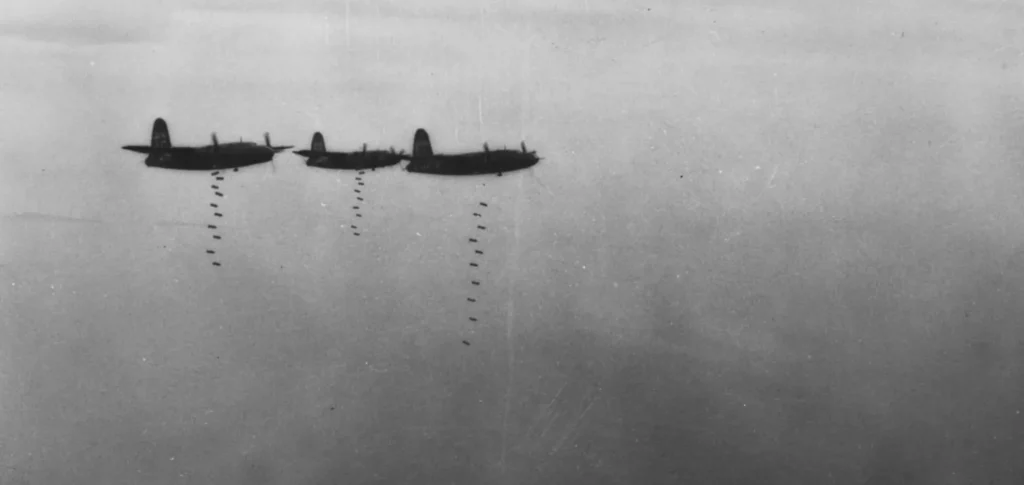
While many decoy sites successfully diverted enemy bombs, their impact did not end with the war. The presence of UXO in and around these locations remains a potential hazard today. Bombs that failed to detonate, or were jettisoned by pilots who realised they had been deceived, can still pose risks decades later.
Even though most decoy sites were established in rural areas, their potential for UXO contamination means that unexpected hazards can exist in locations now earmarked for development. This underscores the importance of UXO risk assessments, especially in areas with known WWII activity. These assessments help determine if a decoy site once existed near a planned construction project and whether it was subjected to enemy bombing.

How Brimstone can help with UXO risk mitigation
At Brimstone, we specialise in comprehensive UXO risk assessments that help developers and landowners identify and mitigate potential UXO threats. Our team of experts utilises historical research, surveys, and cutting-edge technology to assess and address UXO risks effectively.
If you have a construction or development project planned in an area with potential WWII activity, ordering a UXO risk assessment is a crucial step to ensuring safety. Our assessments provide detailed reports outlining the likelihood of UXO presence and recommendations for further action if necessary.
To order a UXO risk assessment for your project, contact us by:
- Filling out a contact form here,
- Emailing our Commercial team at enquire@brimstoneuxo.com,
- Or calling us on 020 7117 2492 (please select option 1 for our Commercial Team).
For the latest updates on UXO risk management and historical insights, follow Brimstone on Facebook, Instagram, X (formerly known as Twitter), LinkedIn and YouTube.
The WWII decoy sites of the UK stand as a testament to the ingenuity of wartime deception strategies. While their primary purpose was to save lives and infrastructure during the war, their hidden dangers continue to impact modern land use and development. By conducting thorough UXO risk assessments and taking the necessary precautions, we can ensure that history remains preserved while keeping people safe from the unseen remnants of past conflicts.
"*" indicates required fields