What Is an Intrusive UXO Survey? | Practical Guide for Developers
When redeveloping brownfield sites or working on new infrastructure, understanding the risk of unexploded ordnance (UXO) is critical. An intrusive UXO survey is one key method of identifying and managing these hidden hazards.
This guide explains what an intrusive UXO survey involves, how it works, and why it’s essential for developers.
What Is an Intrusive UXO Survey?
An intrusive UXO survey physically penetrates the ground to detect buried unexploded ordnance, including deep-buried bombs, shells, and other potentially hazardous munitions, before any major groundworks begin. These surveys are typically undertaken after a UXO risk assessment has identified a credible risk on a site and often before piling, boreholes, or deep excavation works start.
Unlike non-intrusive surveys, which are limited to detecting shallow anomalies, intrusive surveys can investigate much deeper, often to the maximum bomb penetration depth of 12 metres, or even deeper when required.
This type of survey gives developers the confidence to plan and build safely, helping to avoid costly delays, ensure compliance with health and safety obligations, and protect workers and the public.
CPT Rigs and Their Role
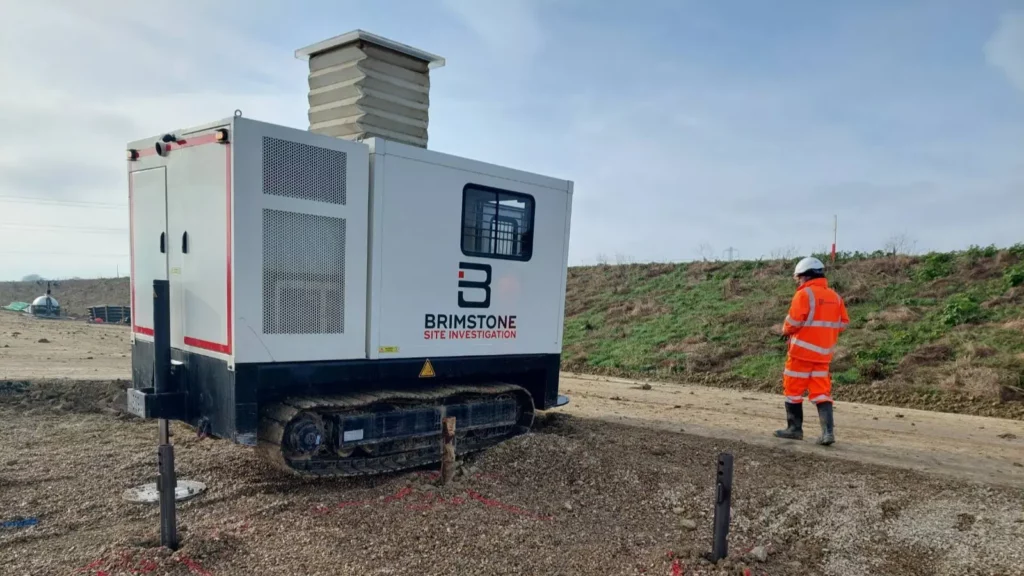
The most common technology used in intrusive UXO surveys is the CPT Rig. These specialist rigs are designed to penetrate the ground in a controlled, precise manner while collecting real-time data.
Key features and advantages of CPT rigs include:
- Minimal ground disturbance compared to large-scale excavation methods.
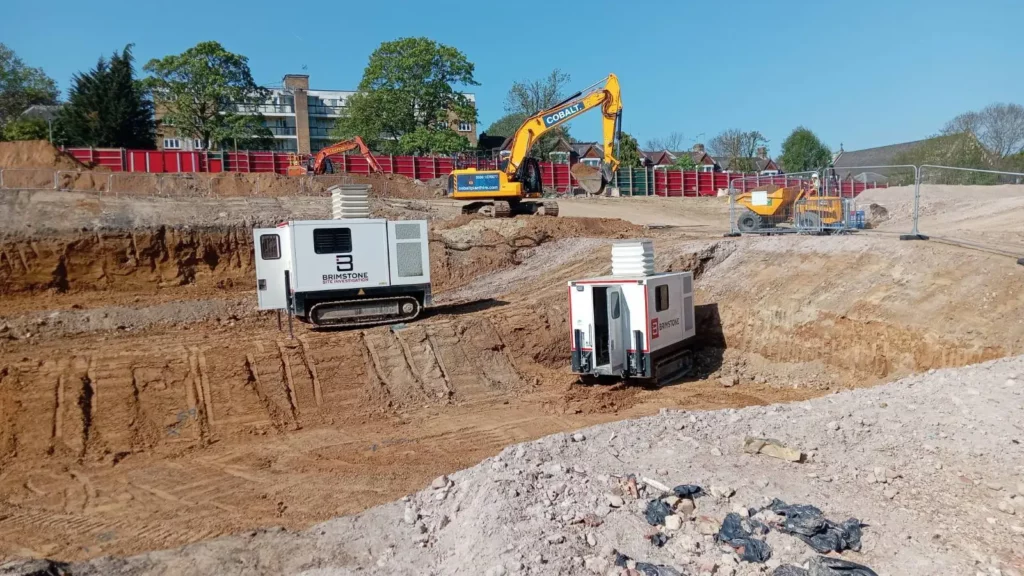
- Designed to traverse tough site conditions, including brownfield land or areas with uneven terrain.
- Early risk mitigation – identifying potential UXO items before piling or other deep groundworks begin, significantly reducing risk.
- Compliance support – surveys follow industry guidance such as CIRIA C681 and general health and safety legislation requiring risk identification and mitigation.
- Advanced data modelling – modern rigs with triaxial magnetometer capability can model targets in three dimensions, helping differentiate between benign metallic objects and potential unexploded ordnance.
Step-by-Step Guide to an Intrusive UXO Survey
- Planning & Positioning: The Brimstone team reviews your site information and designs an appropriate grid or layout, often based on planned pile positions or excavation locations.
- Rig Setup: Once the CPT rig has arrived at your site, it is positioned over the survey location and lifted onto its jacks to ensure it is level and horizontal – critical for precise, straight-line probe insertion.
- Probe Insertion: Using hydraulic pressure, the magnetometer cone, mounted on a rod, is pushed into the ground.
- Advancing the Cone: As the first rod reaches its maximum depth, the next rod is screwed on and pushed further into the ground, advancing the magnetometer cone. This is repeated until the cone reaches the maximum bomb penetration depth.
- Real-Time Monitoring: Magnetometer readings are monitored in real time to detect any magnetic anomalies that could indicate buried ferrous items. (This means the survey can be aborted if an anomaly is detected.)
- Data Recording: All readings are logged for detailed post-survey processing and interpretation.
- Data Processing & Interpretation: Logged data is sent to our geophysics team who use advanced modelling software to analyse anomalies and estimate their depth, mass, and coordinates.
Following interpretation, clients receive a comprehensive report detailing all findings, including:
- Identified anomalies and their likely characteristics.
- Recommendations for any further action.
- Confirmation where no UXO hazards were detected.
When and Why You Might Need an Intrusive UXO Survey
An intrusive UXO survey might be recommended when:
- A UXO risk assessment indicates an elevated or high risk of unexploded ordnance on the site.
- The site has a historical connection to military use, air raids, or other explosive activities.
- Proposed construction works will involve deep excavation, piling, or drilling where encountering buried UXO poses a risk.
- A site with brownfield or made ground requires a UXO survey.
Benefits of an Intrusive UXO Survey
Safety: Hidden hazards are identified before construction starts, protecting workers, the public, and property.
Compliance: Helps demonstrate a duty of care under health and safety legislation and aligns with CIRIA C681 best practice.
Confidence for Developers: Provides reliable data to inform project planning and design.
Cost Efficiency: Early detection prevents unexpected incidents that could otherwise result in major delays or remediation costs.
Ready to minimise risk on your site?
Ensure your project progresses safely and with confidence. Brimstone UXO’s intrusive UXO surveys deliver accurate, dependable subsurface data tailored to your development needs. Book your survey today or speak to our team about the right UXO risk mitigation strategy for your project.
For regular updates, insights, and industry guidance, follow Brimstone UXO on Facebook, Instagram, LinkedIn and YouTube.
"*" indicates required fields