Leasing Land for Energy Projects | The Overlooked UXO Risks for Farmers and Landowners
Across the UK, an increasing number of farmers and landowners are opting to diversify by leasing their land for renewable energy projects. Solar farms, battery storage sites and wind energy developments are providing a valuable income stream and helping to meet the country’s ambitious net zero targets.
While the benefits of such diversification are clear, one risk is often overlooked: the potential presence of unexploded ordnance (UXO) beneath the surface.
At Brimstone, we’ve supported a growing number of landowners and developers working on renewable energy projects, and while every site is unique, many of the same UXO risks, assumptions and mistakes arise time and time again.
“It’s Been Farmed for Decades — Surely There’s No UXO Risk?”
One of the most common myths we encounter is the belief that decades of ploughing, harvesting, and general land use automatically rule out the presence of UXO. The thinking goes: if something dangerous was there, it would have turned up by now.
However, this assumption can be misleading and, in some cases, dangerously incorrect.
Farmland and open countryside across the UK saw extensive military use during both World Wars. Temporary airfields, decoy sites, military training grounds, and defensive installations were often located on what is now farmland. Even land not directly targeted could have been affected by stray bombs, jettisoned loads, or munitions dropped during inaccurate raids.
What’s more, many types of ordnance can remain buried, undisturbed, and undetected for decades. Farming activity rarely exceeds the level at which larger items of ordnance may rest.
Cleve Hill Solar Farm: A Real Example
Our work at the Cleve Hill Solar Park, one of the UK’s largest solar farms, is a clear example of these risks in practice.
Located on the Kent coast, the site was largely open farmland, actively used and worked. However, research into the area identified a credible UXO risk due to the site’s proximity to key WWII military installations including a bombing decoy site, Allied defence positions and recorded bomb strikes in nearby towns. Our subsequent UXO survey and target investigation confirmed the presence of UXO on site, in the form of several 30mm projectiles being located at a depth of 1 metre. These had remained undisturbed despite extensive farming on the land.
Our work at Cleve Hill highlights two key points: farmland is not automatically low risk, and thorough UXO risk mitigation is essential for sites with planned intrusive works.
Why Renewable Energy Projects Can Encounter UXO
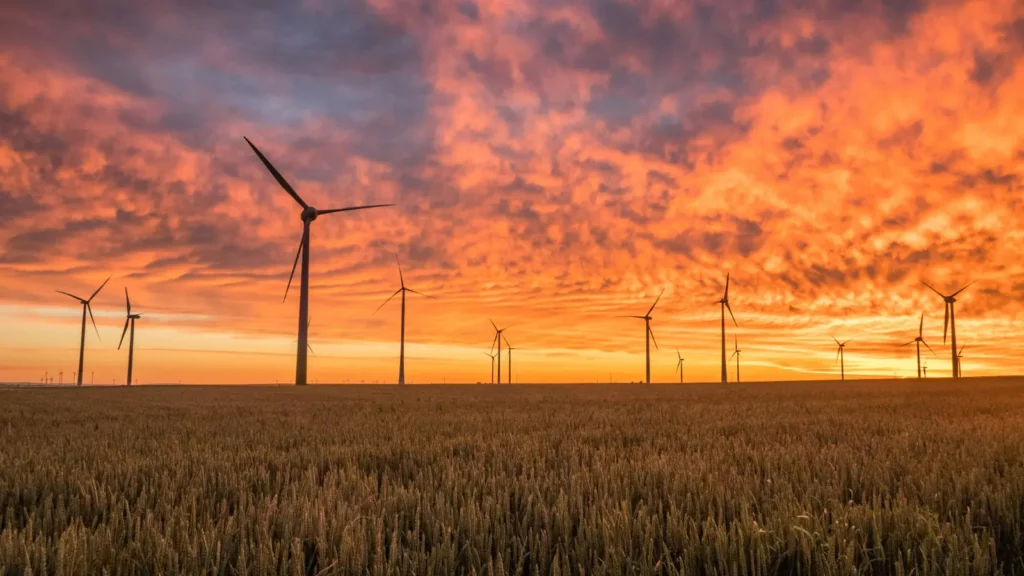
Many traditional farming activities don’t require deep ground disturbances. However, energy development projects often involve trenching, piling, or other intrusive groundwork that can go far deeper and into layers where UXO may still lie buried. This is especially true for:
- Solar farms with cabling and mounting systems
- Wind turbines with deep foundations
- Battery storage units requiring underground infrastructure
- Access road construction or substation installations
Each of these requires a level of ground disturbance that can disturb items of ordnance buried below the surface.
The Right Approach: UXO Risk Assessments and Support
For landowners and developers, the key takeaway is this: even if your land has been worked for generations, don’t assume it’s free from risk. Proactively investigating UXO risks at the outset of a renewable energy project is often far more cost-effective than dealing with delays, emergency callouts or health and safety issues later on — not to mention the very real danger of encountering or striking buried ordnance.
At Brimstone, we provide evidence-led UXO risk assessments, tailored to the site’s history and the proposed groundworks. If a risk is identified, we offer survey, investigation, and clearance services to support safe and efficient development, as we did at Cleve Hill and numerous other renewable energy sites across the UK.
Thinking About Leasing Land for Energy Projects?
Diversifying into renewable energy is a smart move for many landowners, as it supports both income stability and environmental goals. However, sustainable land use also includes safe land use practices.
Factoring in UXO risk from the outset helps protect workers, budgets, and timelines, and ensures that the move toward greener energy is built on solid, secure ground.
If you’re considering leasing land for an energy project and want to better understand the UXO risks, contact our team today at enquire@brimstoneuxo.com or by calling 020 7117 2492.
Learn more about Brimstone UXO and our work by following us on Facebook, Instagram, X, LinkedIn and YouTube.
If you enjoyed this blog, you may also like:
- UXO Risks and Wind Farms | What Developers Need to Know
- UXO Risks and Solar Farms | What Developers Need to Know
- UXO Risk Mitigation for 7 Solar Farms Across the UK
- Why UXO Risk Matters in the UK’s Renewable Energy Future
- UXO Risk and Battery Storage Projects | What Developers Should Consider
"*" indicates required fields