Grey Belt Land and UXO Risk | What Developers Need to Know
As pressure continues to grow to deliver new housing and infrastructure across the UK, attention is increasingly turning to so-called ‘grey belt’ land. These are sites that sit between previously developed brownfield land and traditional greenfield sites, often overlooked but now being reconsidered for development.
For developers, grey belt land represents opportunity. However, it also introduces uncertainty, particularly around ground conditions and legacy risks such as unexploded ordnance (UXO).
Understanding what grey belt land is, and the risks it may carry, is an important part of making informed, safe, and cost-effective development decisions.
What is Grey Belt Land?
Grey belt land is not a formal planning status, but a term increasingly used to describe land that does not clearly fall into either greenbelt protection or established brownfield sites.
It typically includes:
- Underutilised or degraded land on the edge of settlements
- Sites with partial previous development or disturbance
- Areas that may have limited ecological or agricultural value but are not formally classed as brownfield
In many cases, grey belt sites are considered for development because they offer a potential compromise between preserving high-value greenbelt land and meeting housing demand.
Why Grey Belt Land is Becoming More Relevant
With continued pressure to unlock land supply, grey belt sites are increasingly seen as a practical option in planning discussions.
They often offer:
- Proximity to existing infrastructure and settlements
- Fewer planning constraints than protected greenbelt land
- Potentially faster delivery timelines where constraints are understood early
However, while planning potential is becoming clearer, underlying site conditions are often less well defined.
The Hidden Risk: Unexploded Ordnance (UXO)
One of the most frequently overlooked risks on grey belt land is the potential presence of unexploded ordnance.
Across the UK, many areas were affected by historical military, industrial, or wartime activity that is not always visible from surface conditions alone. As a result, land that appears undeveloped or only lightly used may still carry legacy UXO risks.
These risks can stem from:
- Former military training areas or ranges
- WWII bombing activity in urban and semi-urban locations
- Historical industrial sites involved in wartime manufacturing or storage
- Defence activity dating back to both WWI and WWII

Managing Risk Early with Non-Intrusive UXO Surveys
One of the most effective ways to assess UXO risk on grey belt land is through a non-intrusive UXO survey.
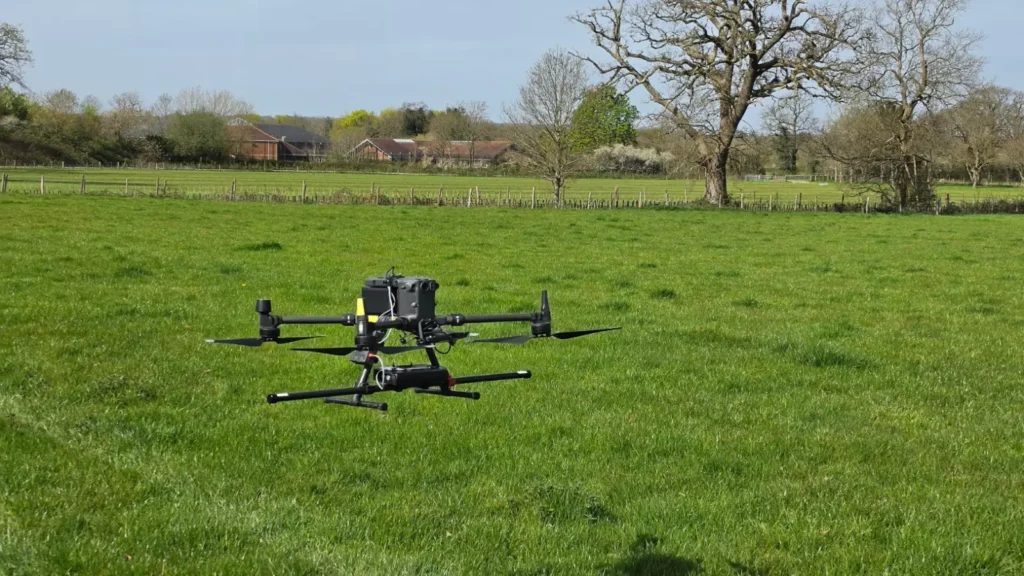
This method uses specialist magnetometry equipment to assess large areas without disturbing the ground, identifying buried ferrous anomalies that may indicate the presence of unexploded ordnance.
It is particularly useful on grey belt sites because it:
- Provides rapid coverage across large sites
- Is suitable for difficult to access areas, such as those with uneven terrain or high-water tables
- Requires minimal ground disturbance during initial surveying
- Helps determine whether UXO risk is present
- Reduces uncertainty before groundworks begin
Where anomalies are identified, further investigation can then be carried out in a controlled and targeted way, supporting a more efficient risk management process.
A More Informed Approach to Grey Belt Development
Grey belt land offers clear development potential, but can also conceal legacy risks that aren’t always immediately visible.
Planning status alone does not fully reflect what may be present beneath the surface, and legacy risks such as UXO can easily be overlooked without early due diligence.
Early-stage risk assessments and UXO surveys help reduce uncertainty, support safer decision-making, and minimise disruption later in the project lifecycle.
Speak to the Brimstone UXO team to discuss your project requirements.
For updates, insights, and industry guidance, follow Brimstone UXO on Facebook, Instagram, LinkedIn and YouTube.
"*" indicates required fields