What Non-Intrusive UXO Surveys Can and Cannot Detect
Unexploded ordnance (UXO) remains a consideration for many construction and development projects across the UK. With much of this legacy buried beneath the surface, understanding how it is detected is an important part of effective risk management.
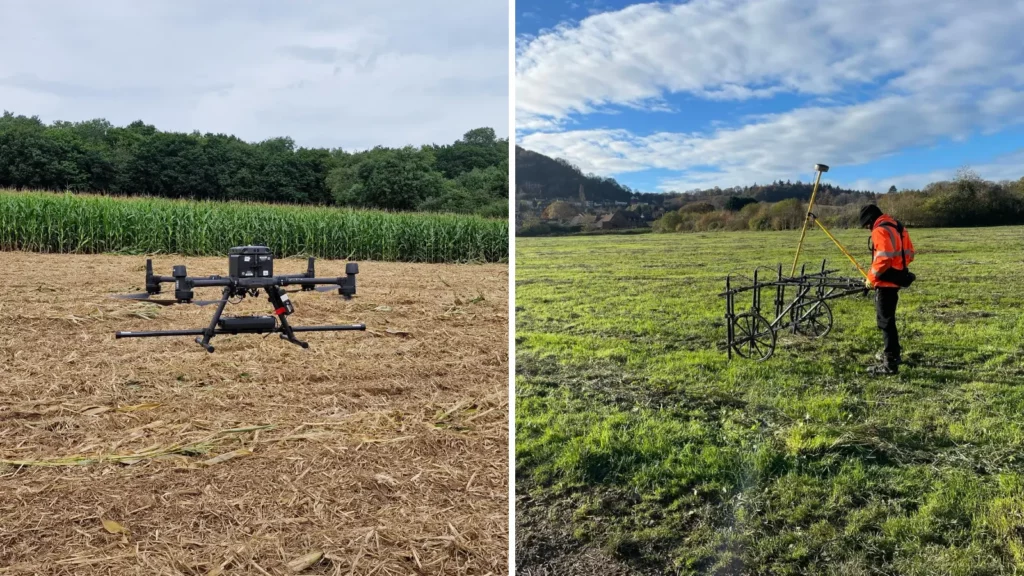
Non-intrusive UXO surveys are one example of how companies like Brimstone search for items of ordnance. These surveys use magnetometry to detect buried metallic objects on greenfield land without disturbing the ground, making them a fast and efficient method for assessing large areas, particularly during the early stages of a project.
However, like any survey method, they have defined capabilities and limitations. Understanding these is key to selecting the right approach for your site.
What Non-Intrusive UXO Surveys Can Detect
Non-intrusive UXO surveys are highly effective at identifying shallow-buried ferrous objects across large greenfield sites. In many cases, they can reliably detect items to an assured depth of around 4 metres, with larger ordnance sometimes identifiable at greater depths depending on site conditions and item size.
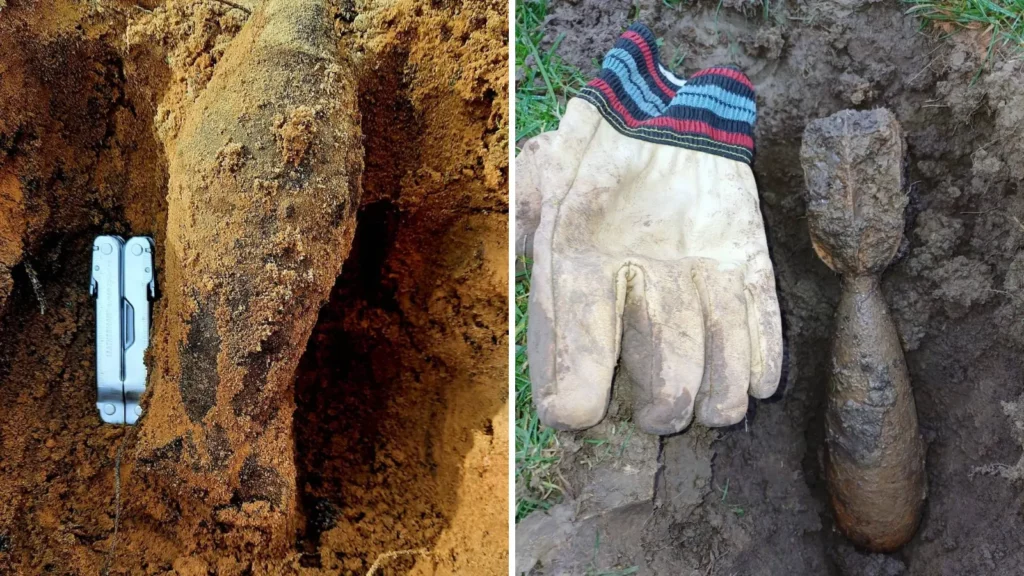
They are particularly effective at identifying shallow-buried unexploded ordnance, including smaller bombs and land service ammunition (LSA), a category of land-based military ordnance which typically includes grenades, mortars, projectiles, mines, and rockets.
Using multi-channel sensor systems, often in a towed or pushed format, large areas can be covered efficiently while still producing high-resolution geophysical data. In more complex or restricted environments, drone-mounted systems can be deployed to enable survey coverage and reduce surveying time.
This combination of speed, coverage and resolution allows project teams to identify areas of interest early, helping reduce uncertainty at the outset of a project and informing where further investigation may be required.
What Non-Intrusive UXO Surveys Cannot Detect
While non-intrusive surveys are a valuable tool, they are not suitable for every scenario.
One of the main limitations is depth. Although effective for shallow investigations, the detection capability reduces as depth increases. Where deeper targets are a concern, particularly on sites with significant historical bombing activity or deep groundworks, intrusive survey methods are typically required instead.
Material type is another important consideration. Magnetometry relies on detecting ferrous materials, meaning non-ferrous items such as aluminium casings or plastic components cannot be identified using this method.
Site conditions can also influence survey effectiveness. Areas with high levels of ferrous debris, such as made ground or former industrial land, can create magnetic noise. This can make it more difficult to distinguish between harmless debris and potential UXO anomalies. In these situations, an intrusive UXO survey is needed instead.
When Is a Non-Intrusive Survey the Right Choice?
Selecting the most appropriate survey method depends on a range of factors, including site history, ground conditions, and the type of planned works.
Non-intrusive UXO surveys are most effective where:
- There is a potential for shallow UXO contamination on greenfield land
- Large areas need to be assessed quickly and efficiently
- Ground disturbance needs to be minimised
- Access conditions allow for pushcart, towed-array, or drone deployment
Non-intrusive methods provide broad, efficient coverage where shallow risks are anticipated, while intrusive surveys are used to investigate deeper anomalies or more complex ground conditions. In some cases, the two approaches can work together as part of a staged strategy.
If you are unsure which approach is best suited to your project, our team can help you assess the risks and recommend the most effective solution.
Book your Non-Intrusive UXO Survey
Non-intrusive UXO surveys play an important role in identifying potential risks at an early stage. They offer a reliable and efficient way to detect shallow ferrous objects across large areas, supporting informed decision-making for construction and development projects.
However, understanding their limitations is key. In many cases, they form part of a wider risk mitigation strategy, working alongside risk assessments, intrusive methods and other on-site support services to ensure all risks are identified and investigated.
By combining the right techniques, UXO risks can be managed effectively, helping projects move forward with confidence.
To book your Non-Intrusive UXO Survey, reach out to our Commercial Team.
For regular updates, project insights, and industry guidance, follow Brimstone UXO on Facebook, Instagram, LinkedIn and YouTube.
"*" indicates required fields