Pushcart vs Drone UXO Surveys | What’s the Difference?
Understanding unexploded ordnance (UXO) risk is a key part of early project planning. Non-intrusive survey methods enable shallow buried hazards to be identified without ground disturbance, helping reduce uncertainty before works begin.
At Brimstone UXO, we tailor our approach to each site, with pushcart and drone surveys among the most widely used methods for detecting shallow ferrous anomalies. Both methods are specifically suited to greenfield land, where the absence of previous ground disturbance or construction activity helps ensure reliable results.
What is a Non-Intrusive UXO Survey?
A non-intrusive UXO survey is used to detect ferrous objects beneath the ground that could be unexploded ordnance. This includes items often found at shallow depths such as projectiles, grenades and mortars, commonly referred to as Land Service Ammunition, although larger items can also be identified.
These surveys are typically carried out during the pre-construction phase and are particularly effective on greenfield sites and areas where ground disturbance needs to be minimised. By identifying potential hazards early, they help inform risk mitigation strategies and reduce the likelihood of delays once groundworks begin.
At Brimstone our systems can detect anomalies down to an assured depth of up to four metres, with deeper detection possible for larger ordnance.
Pushcart UXO Surveys
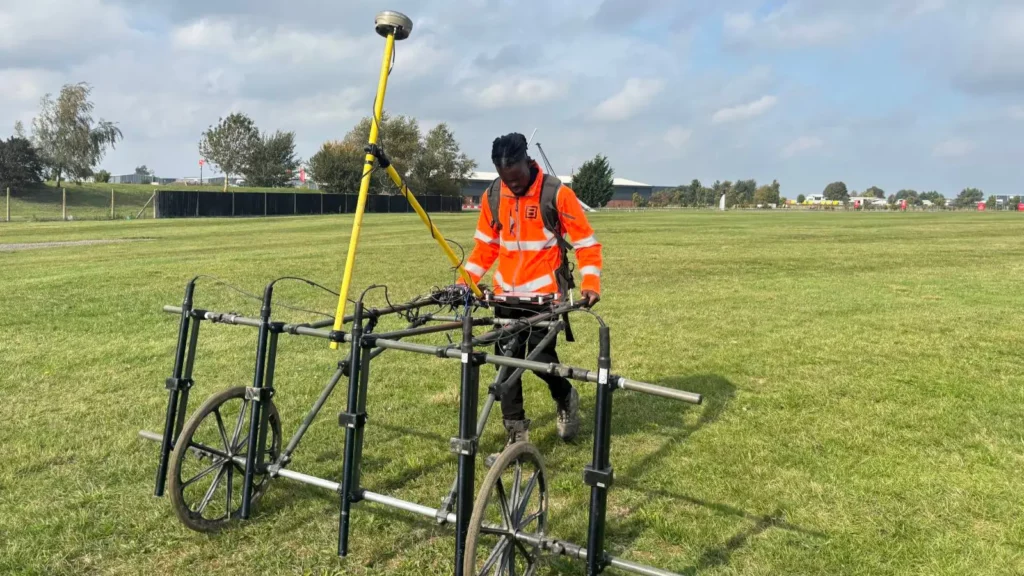
Pushcart surveys are a well-established method of non-intrusive UXO detection, typically used on small to medium-sized, accessible sites.
The survey is carried out by a specialist two-person team, who manually guide a multi-sensor system across the site. Using a five-channel magnetometry setup, the system detects ferro-magnetic anomalies beneath the surface that may indicate the presence of unexploded ordnance.
These anomalies are recorded and analysed post-survey, allowing for targeted investigation where required.
When are pushcart surveys suitable?
Pushcart surveys are typically the preferred option where:
- Ground conditions are relatively even and accessible
- The site is small to medium in size
- There are minimal obstructions such as dense vegetation or structures
Case Study: Beckingham, Nottinghamshire
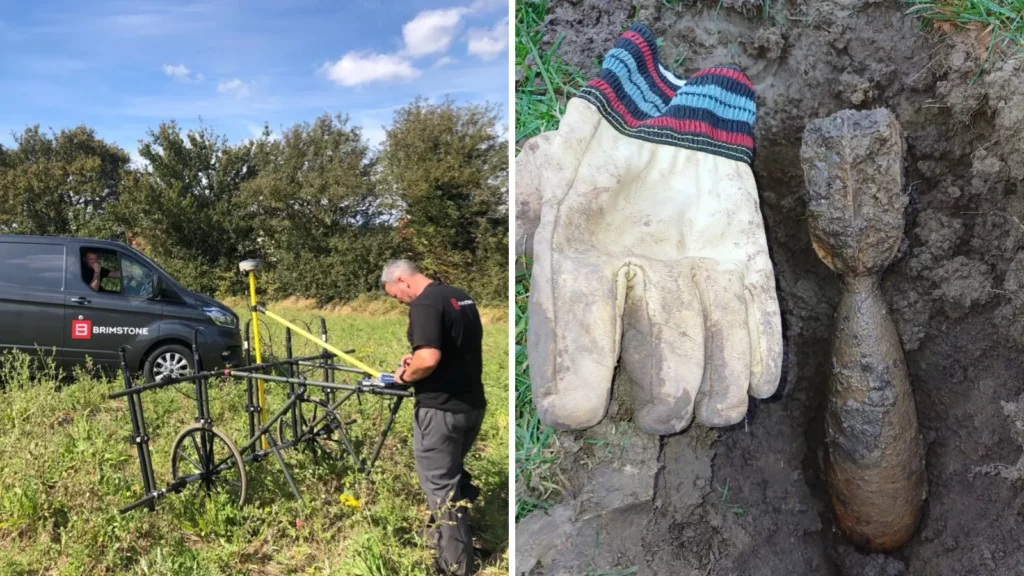
Brimstone UXO deployed a two-person team to Beckingham to conduct a pushcart non-intrusive survey across 2 hectares ahead of an Army cadet training facility extension.
The survey identified several anomalies, including one target that led to the discovery of a 3” ML mortar. Following liaison with authorities, a military EOD team safely disposed of the item the same day.
With all targets investigated and the site certified as ALARP, the client was able to proceed with groundworks safely and without delay.
Drone UXO Surveys
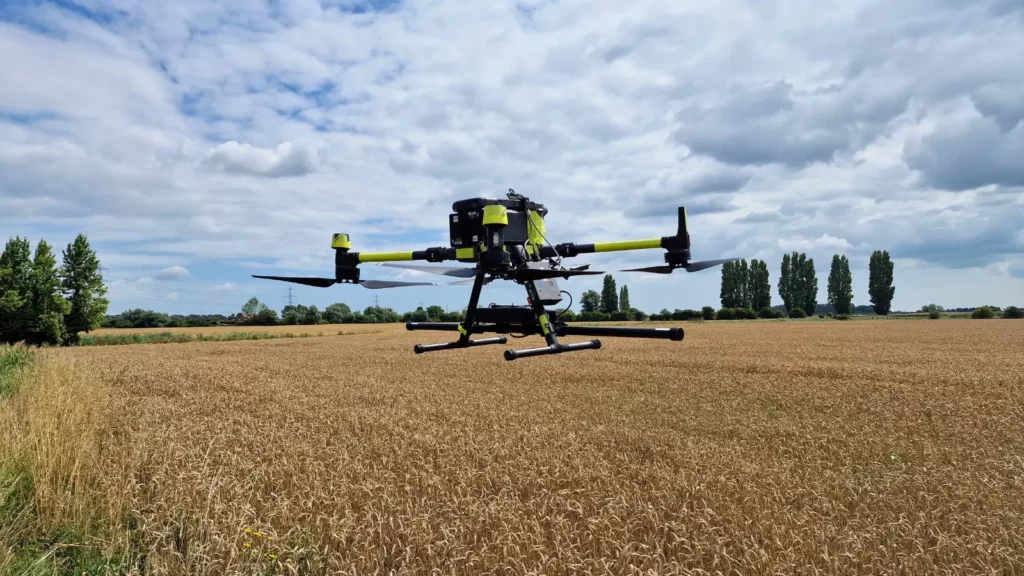
Drone UXO surveys offer a more flexible and efficient approach, particularly for large or difficult-to-access sites.
Brimstone UXO was the first company to bring UXO drone surveys to market in the UK and internationally. Our UAV systems are equipped with magnetometry, as well as LiDAR and photogrammetry technology, enabling both subsurface detection and detailed site mapping.
When are drone surveys suitable?
Drone surveys are particularly effective where:
- Sites are large in scale
- Ground access is limited or impractical
- Terrain is uneven, obstructed or unsafe for manual survey teams
- Programme timelines require a faster solution
Drone systems can typically cover up to five times more ground in a single day compared to pushcart surveys, making them a practical choice for large-scale developments.
Case Study: Large-Scale UAV Survey in Lithuania
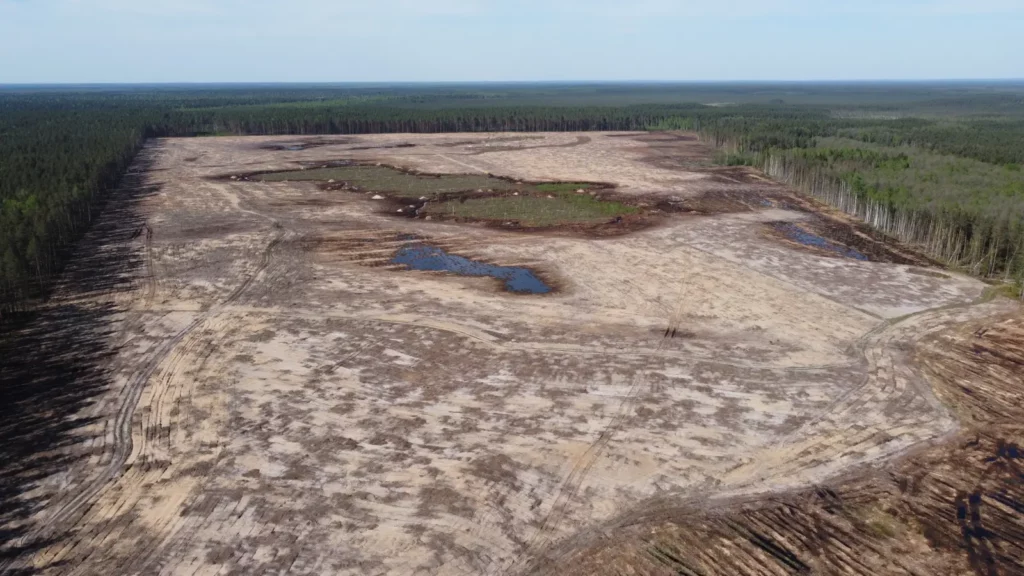
On a major international project, Brimstone was appointed to survey approximately 1,300 hectares of land for a new military training ground in Lithuania.
The scale of the site, combined with varied and challenging terrain, meant traditional ground-based survey methods would have been inefficient and time-consuming. With accessibility and programme constraints to consider, a drone UXO survey was selected.
Using UAV-mounted magnetometry systems, Brimstone was able to rapidly survey the site, delivering comprehensive coverage across the entire area. The approach significantly reduced survey time while maintaining data quality.
The survey identified multiple UXO items, including sub-munitions and practice bombs, allowing the client to move forward with a clear understanding of the risks and required mitigation.
Pushcart vs Drone | Key Differences
While both methods are designed to detect shallow buried UXO, the choice between them depends on site conditions and project requirements.
Pushcart surveys are best suited to smaller, accessible sites, while drone surveys offer a faster, more flexible solution for large or complex areas where traditional methods may not be viable.
In some cases, a combination of both methods may be the most effective approach, particularly on sites with mixed terrain or varying accessibility.
Choosing the Right Approach
Every site presents its own challenges. Factors such as previous land use, terrain, accessibility, planned works and UXO risk all influence the most appropriate survey method.
At Brimstone UXO, we work closely with clients to assess these factors and recommend a solution that aligns with project requirements, budgets and timescales.
Speak to Our Team
If you’re planning a development and need to better understand the UXO risk on your site, our team is here to help.
Get in touch to discuss your project or explore our non-intrusive UXO survey services to learn more about how we support projects at the earliest stages.
For updates, project insights and industry guidance, follow us on Facebook, Instagram, LinkedIn and YouTube.
"*" indicates required fields