Brownfield Development in 2026 | What Developers Need to Know About UXO
Brownfield regeneration is central to the UK’s housing and infrastructure strategy in 2026. With data showing that England alone has enough brownfield land to deliver nearly 1.5 million homes without encroaching on greenfield sites, developers are under increasing pressure to bring these sites forward efficiently and responsibly.
Early-stage due diligence is therefore critical, including understanding any unexploded ordnance (UXO) risks that could impact groundworks.
What Is Brownfield Land and Why It Matters in 2026
Brownfield land is previously developed land that is now disused, derelict, or underused, typically sites with an industrial, commercial, or urban legacy, such as old factories, petrol stations, rail yards or quarries.
This land contrasts with greenfield sites (undeveloped open spaces) and has become a focus for UK redevelopment due to:
- Government policy aiming to protect greenbelt and rural landscapes
- Local planning authorities promoting efficient use of existing infrastructure
- The need to address the housing shortage
According to recent analysis of brownfield registers, the number of identified sites has risen significantly, with many already having planning permission, meaning they are “shovel-ready” for development.

Why UXO Risks Must Be Front-of-Mind on Brownfield Sites
Brownfield sites can often carry a long and complicated history, including former wartime activity, industrial manufacturing, storage use, and logistical hubs, all of which can increase the likelihood of UXO contamination. For many sites, this risk is manageable and predictable if identified early.
Site history is not always obvious, particularly on long-used brownfield land, so early UXO risk assessments help avoid:
- Design changes and reworks
- Costly programme delays
- Health and safety incidents during groundworks
Early identification of UXO risk feeds directly into feasibility, design, and risk planning, helping keep schemes on time, on budget and compliant with health and safety expectations.
UXO Risk Assessments: The First Step in Safe Development
Before ground works begin, a UXO risk assessment should be integrated into the project’s early planning phase. These assessments consider:
- Historical land use
- Wartime and military activity
- Post-war development and construction methods
- Aerial imagery and archive research
Early risk assessments help inform budgets and programme timelines more accurately. They also align UXO planning with wider project constraints such as environmental assessments, ground contamination studies, and utility diversions.
For some sites, a UXO risk assessment alone may be sufficient to demonstrate ALARP compliance. However, where the assessment identifies an elevated or high risk, additional mitigation measures will be recommended.
Intrusive UXO Surveys: Ideal for Brownfield Sites
For brownfield sites with a credible UXO risk, an intrusive UXO survey is often the most suitable way of investigating what lies beneath the surface before piling, excavation, or other deep ground works begin.
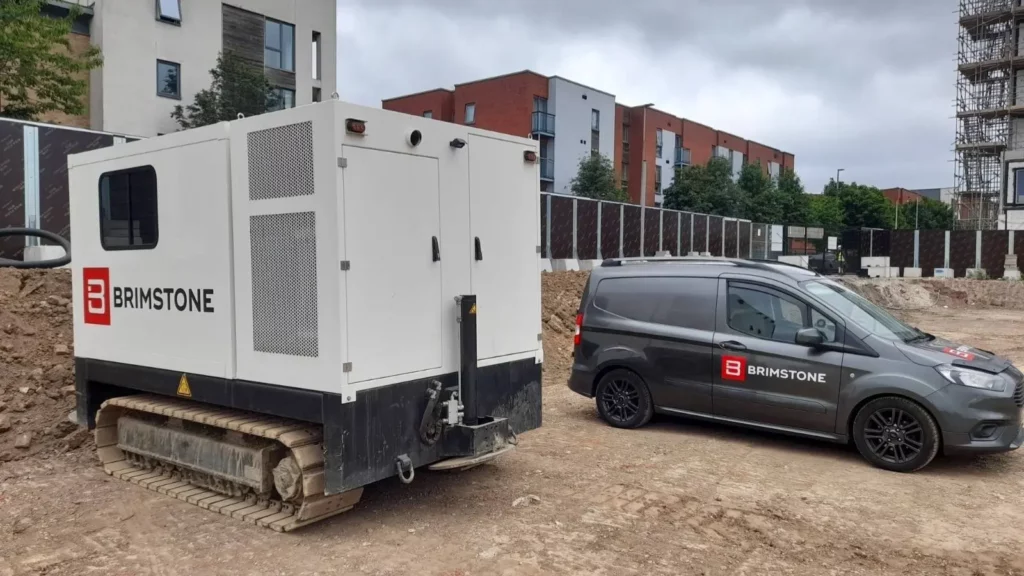
These surveys use a CPT rig to probe the ground with minimal disturbance, monitoring magnetic anomalies in real time and producing detailed reports on any potential UXO items. Intrusive surveys are particularly recommended when:
- A UXO risk assessment shows an elevated or high risk
- The site has a military or industrial history
- Groundworks involve deep excavation, piling, or boreholes
Benefits include: safety for workers and the public, compliance with health and safety regulations, confidence in project planning, and reduced risk of delays or unexpected remediation costs.
Alternatives to UXO Surveys
A UXO watching brief can often complement risk assessments and intrusive surveys on brownfield projects, providing on-site monitoring during excavation or groundworks. A UXO engineer is present to visually inspect excavations and respond immediately if any ordnance is uncovered.
Watching briefs are most useful when:
- Works are shallow or limited in scope
- An intrusive survey isn’t suitable
- Unexpected ground conditions arise during construction
This service helps projects stay safe, compliant, and on schedule.
Lessons from Brownfield UXO Projects
Our experience across complex brownfield sites highlights how proactive UXO planning benefits delivery:
Tilbury:
At the Tilbury Energy Recovery Facility (Essex), Brimstone surveyed 1,639 positions using all three of our CPT rigs. No anomalies were identified, allowing piling and excavation to proceed safely.
Northfleet:
At Northfleet, Kent, Brimstone completed 1,106 intrusive probes across the full site footprint using our CPT rigs. A matrix-style survey scanned the entire area, and no anomalies were detected. This allowed the client to proceed with groundworks safely and with site-wide ALARP clearance.
These projects demonstrate how thorough, early intrusive surveys provide confidence for large-scale brownfield developments.
Conclusion: UXO Planning Is Good Development Practice in 2026
As brownfield land becomes an ever more critical resource for housing and infrastructure in the UK, developers must take UXO risk seriously – not as an afterthought, but as part of early risk and design planning.
Through UXO risk assessments, intrusive UXO surveys, and watching briefs where appropriate, UXO contamination becomes a manageable and predictable element of brownfield development, helping to keep projects compliant, safe, and on schedule.
Get in touch with Brimstone UXO to discuss how our services can support your next brownfield project, or follow us on Facebook, Instagram, LinkedIn and YouTube for regular updates, project insights, and industry guidance.
If you enjoyed this blog, you might also like:
- How UXO Risk Impacts Brownfield Redevelopment Timelines
- What Is an Intrusive UXO Survey? | Practical Guide for Developers
- UXO Risks Beneath Existing Buildings | What Developers Should Consider.
- What Every Developer Needs to Know About UXO Risks on Brownfield Sites
"*" indicates required fields