UXO Risks and Wind Farms | What Developers Need to Know
As the UK accelerates its transition to renewable energy, onshore wind farms are becoming an increasingly important part of the energy mix. But while the focus is often on planning, infrastructure, and environmental impact, one potential hazard is often overlooked: unexploded ordnance (UXO).
UXO risks aren’t limited to former military sites or urban areas. In fact, many wind farms are planned in rural or coastal locations that were affected by wartime activity, whether through bombing, training exercises, or munitions disposal. With wind farm construction involving deep excavations for turbine foundations and other infrastructure, there’s a chance of encountering deep buried ordnance.
Identifying and addressing UXO risks early in the project can help avoid delays, protect your workforce, and keep the build on track. This blog outlines why UXO matters for wind farm developments, what to look out for, and how Brimstone UXO can help you manage risk at every stage.
Why UXO Matters for Wind Farm Projects
The construction of an onshore wind farm is a major undertaking, often requiring significant ground disturbance to accommodate the size and scale of modern turbines. Foundations for wind turbines can extend several metres below the surface, with deep piling or other foundation techniques used to ensure stability. This level of excavation means that developers could potentially encounter deep-buried UXO, particularly large high explosive bombs from the Second World War.
Unlike other renewable energy projects, such as solar farms, which generally involve shallower groundwork, wind farms are more exposed to the risks posed by unexploded ordnance at depth. These buried devices may have gone unnoticed for decades, hidden well beneath the surface and unaffected by previous land use or agricultural activity.
Finding a buried bomb partway through construction is not only a serious safety concern, it can halt works entirely, trigger emergency response measures, and lead to considerable delays and costs. Depending on the location, it could also impact surrounding infrastructure or nearby communities.
That’s why assessing and addressing UXO risk at the earliest stages of planning is so important. It allows developers to make informed decisions, build realistic timelines and ensure that appropriate mitigation measures, such as targeted intrusive surveys, are in place well before breaking ground.

Historical Bombing and Land Use
While onshore wind farms are often located in rural or seemingly quiet landscapes, these areas were not necessarily spared from wartime activity. During both world wars, large swathes of farmland, open countryside, and remote hilltops were used for military purposes including training grounds, munitions storage, and defensive installations. Some were even requisitioned for temporary airfields or decoy sites designed to divert enemy bombers from strategic urban targets.
As a result, locations now seen as ideal for wind farm development may have been affected by bombing raids, either directly or indirectly. In some cases, aircraft jettisoned bombs over open countryside when returning to base, especially if they had been damaged or were unable to complete their missions. Bombs may also have missed intended targets due to navigational errors, poor visibility, or mechanical failure, scattering ordnance in unexpected locations.
After the war, further risks were sometimes introduced. Some remote sites were used for the disposal or burning of surplus munitions, often in uncontrolled or informal ways. In other cases, ordnance was simply left behind, overlooked during post-war clearance efforts or deliberately buried and forgotten.
This combination of historical use and post-war disposal practices means that even unexpected areas can carry a hidden UXO legacy. Without a thorough review of historical records and detailed site-specific research, it’s difficult to gauge the true extent of any threat. That’s why a professional UXO risk assessment is an essential first step, providing clarity, identifying potential hazards, and determining whether further investigation is necessary before any intrusive groundworks begin.
How Brimstone UXO Can Help
At Brimstone UXO, we support wind farm developers at every stage of UXO risk mitigation, ensuring projects remain safe, compliant, and on schedule.
Our process typically begins with a Preliminary UXO Risk Assessment, a desk-based study that can usually be completed within 24 to 48 hours. This report reviews the military history of the site to determine whether there’s any reason to suspect UXO contamination. If no significant risk is identified, you may be able to move forward with confidence. However, if early indicators suggest a possible UXO presence, we’ll recommend a more detailed investigation.
A Detailed UXO Risk Assessment involves a thorough review of bombing records, historical maps, aerial imagery, military documents, and other site-specific data. This allows us to assess the likelihood of encountering UXO during your planned works and categorise the site risk as low, moderate, or high. Where a moderate or high risk is identified, mitigation measures will be required before any intrusive work begins. These recommendations are clearly set out in the final report.
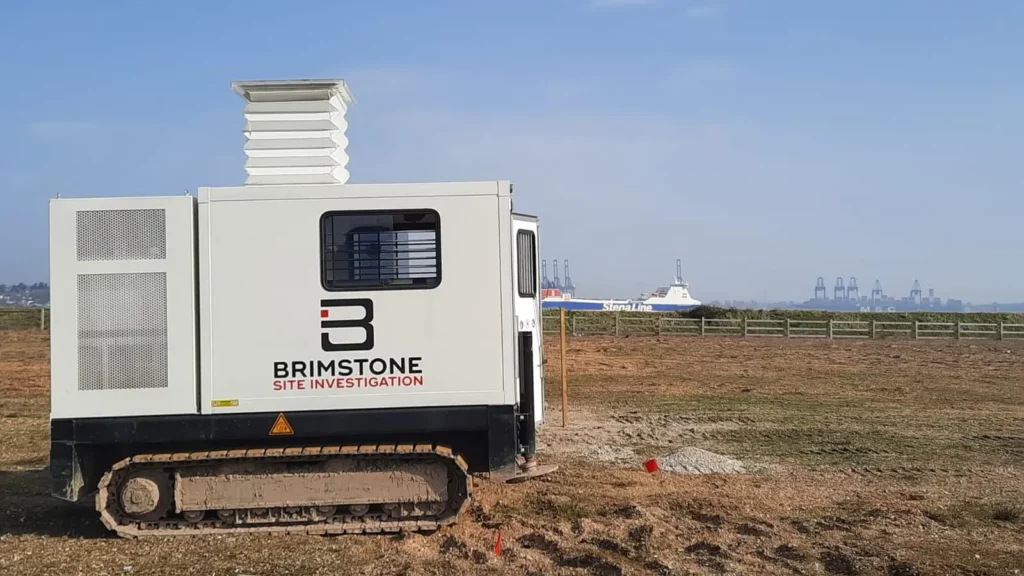
For wind farm developments, mitigation often takes the form of an Intrusive UXO Survey. As turbine foundations, cable trenches, and piling works reach deeper into the ground, there is a greater chance of encountering deep-buried ordnance such as large high explosive bombs. Intrusive surveys allow us to investigate specific areas, such as pile locations or boreholes, using specialised equipment and trained UXO engineers to detect hazards to an appropriate depth.
If an anomaly is identified during the survey, our team may return to site to carry out a Target Investigation to confirm whether the item is UXO and, if so, ensure its safe disposal or clearance.
Depending on the nature of your project, we may also recommend other support services. These include Non-Intrusive UXO Surveys (more suited to shallow UXO risks) and on-site support such as Watching Briefs or Borehole Support, particularly during phases of ground investigation or enabling works.
Once all necessary mitigation has been completed, and the site is considered safe to proceed, we’ll provide an ALARP (As Low As Reasonably Practicable) Certificate. This demonstrates that UXO risks have been appropriately assessed and reduced, giving you the assurance needed to move forward with construction.
Avoiding Delays and Uncertainty
UXO risks may not always be top of mind in renewable energy projects, but failing to address them early can have major consequences. Stopping works after discovering a suspected item of UXO can cause costly delays, with emergency response, evacuations, standing down site teams and bomb disposal operations adding complexity and risk to your programme.
By assessing and addressing UXO risk early in the development process, you can avoid unexpected interruptions later, keeping your project moving forward safely and efficiently.
A Safer Way to Build
As wind energy continues to expand across the UK, so too must our awareness of the ground beneath our feet. UXO risk isn’t always visible, but that doesn’t mean it isn’t there. If you’re embarking on a new wind farm project in the near future, Brimstone UXO is here to help you investigate it properly.
Our team has supported numerous energy and infrastructure projects across the UK, working alongside developers, engineers, and contractors to ensure safety, compliance, and peace of mind at every stage.
If you’re planning an onshore wind farm and want to understand the UXO risks involved, get in touch with us today to discuss how we can support your project.
Find us on Facebook, Instagram, X, LinkedIn and YouTube for sector updates and company news.
If you enjoyed this blog, you may also like:
- UXO Risks and Solar Farms | What Developers Need to Know
- UXO Risk Mitigation for 7 Solar Farms Across the UK
- Why UXO Risk Matters in the UK’s Renewable Energy Future
- UXO Risk and Battery Storage Projects | What Developers Should Consider
- Leasing Land for Energy Projects | The Overlooked UXO Risks for Farmers and Landowners
"*" indicates required fields